How to protect expensive trading cards
An expensive card does not need an elaborate ritual. It needs a clear chain of protection, with no weak step between the card and the place it is stored.
Start with the surface, add structure around it, control the room, and keep a record of what you own. The value may be financial, personal, or both; the care is the same.
Handle it as little as possible
Use clean, dry hands and a clean work area. Hold the card by its edges and keep food, drinks, tape, and pens away from the table.
Do not wipe the surface of a valuable card unless you understand the finish and the risk. Foil, textured, signed, and older cards can be marked by an attempt to remove a small speck. If the card has a condition problem, protection is safer than amateur restoration.
Sleeve the card first
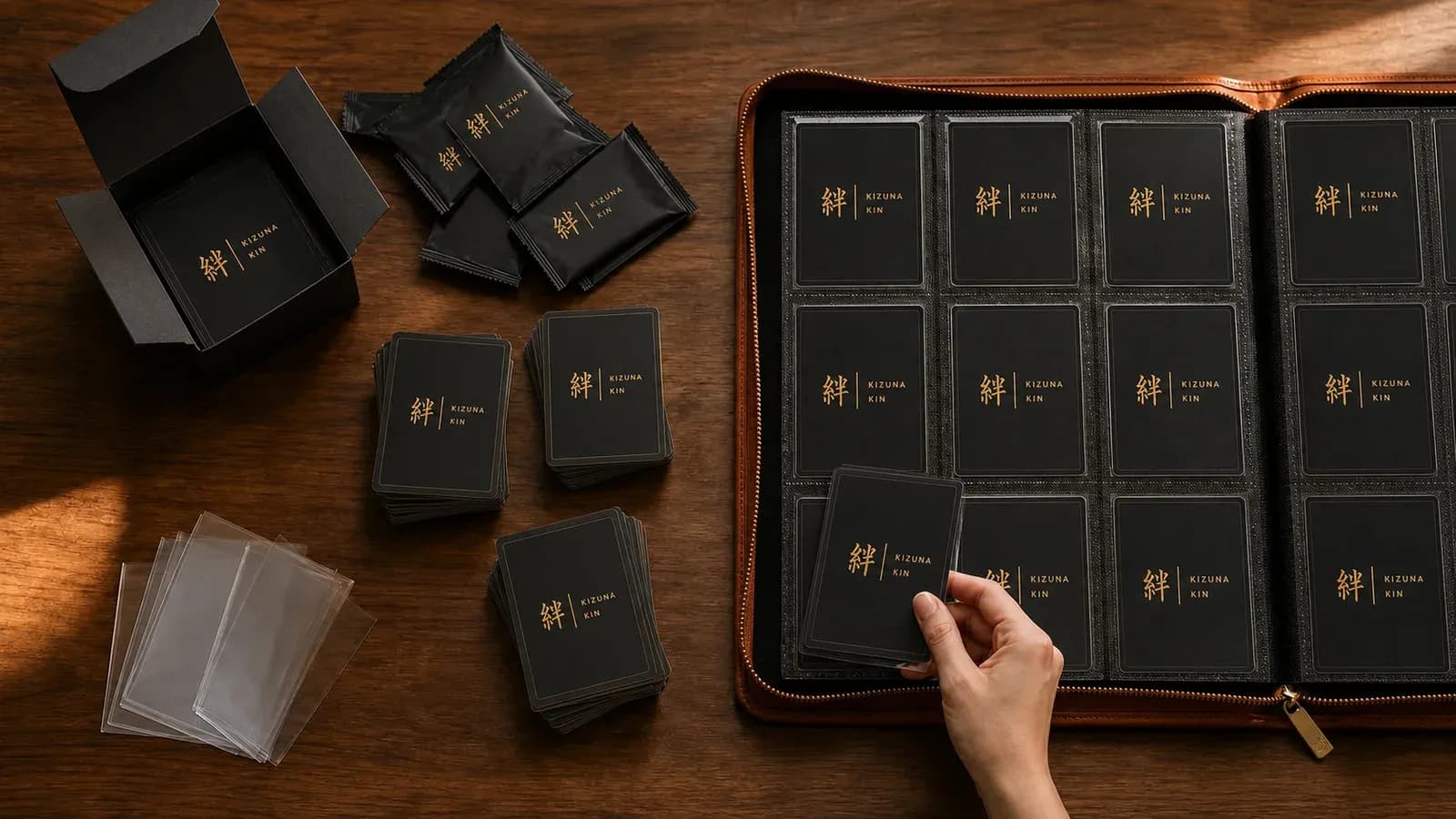
Place the card in a clean, correctly sized soft sleeve. The sleeve is the layer that touches the card, so it should fit smoothly without pinching corners or bowing the card.
From there, choose the outer protection based on how the card will be used:
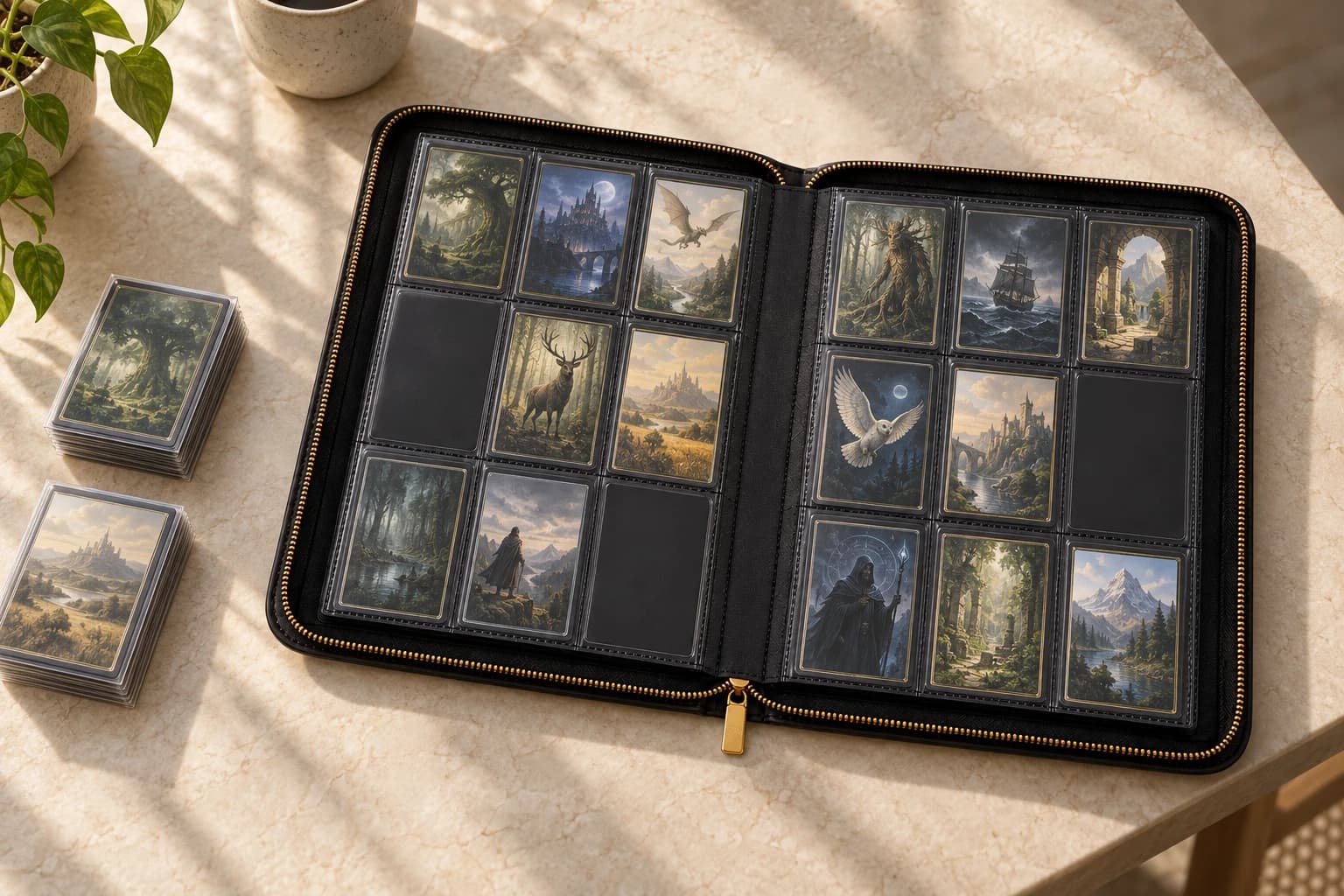
- Binder display: a sleeved card in a well-fitted, side-loading pocket.
- Individual storage: a sleeved card in a rigid toploader.
- Grading preparation: follow the grader's current instructions; PSA presently specifies a clear penny sleeve inside a semi-rigid holder.
- Already graded: keep the slab in a fitted outer sleeve to reduce scratching.
Avoid adhesive near the opening. Tape and sticky notes can catch an edge or leave residue. PSA's shipping guide likewise tells submitters not to use tape or pull tabs on card holders.
Do not add pressure in the name of protection
More layers are not always safer. A card forced into an undersized inner sleeve, thick sleeve combination, or tight binder pocket can develop corner and edge damage before it ever leaves the table.
Everything should fit without effort. The card should stay flat, the holder should not bow, and a binder should close naturally.
If a card is unusually thick, has a patch, or uses a non-standard format, buy protection made for that thickness rather than adapting a standard pocket.
Control the room, not only the holder
A holder protects against handling; it does not create its own climate.
The Library of Congress recommends cool, relatively dry, clean, and stable storage for works on paper, away from attics, basements, radiators, vents, and intense light. Those principles translate well to trading cards.
Keep valuable cards:
- In a comfortable interior room with stable conditions.
- Raised off the floor and away from plumbing.
- Out of direct sunlight.
- In a supported binder, fitted box, cabinet, or safe that does not trap obvious damp.
If your home is humid, monitor the room with a small hygrometer and address the room itself. A few loose desiccant packets are not a substitute for stable conditions.
Be deliberate about display
Light damage is permanent and cumulative. A card can fade even when the light is not hot, and UV-filtering materials reduce risk rather than removing it.
Display a valuable card away from windows, use a stable stand or frame made for its holder, and rotate it back into dark storage. Never leave a card standing where it can fall, be brushed by a sleeve, or be reached by children or pets.
For the cards you would be devastated to fade, a high-quality image or reproduction is the safer everyday display.
Keep a private record
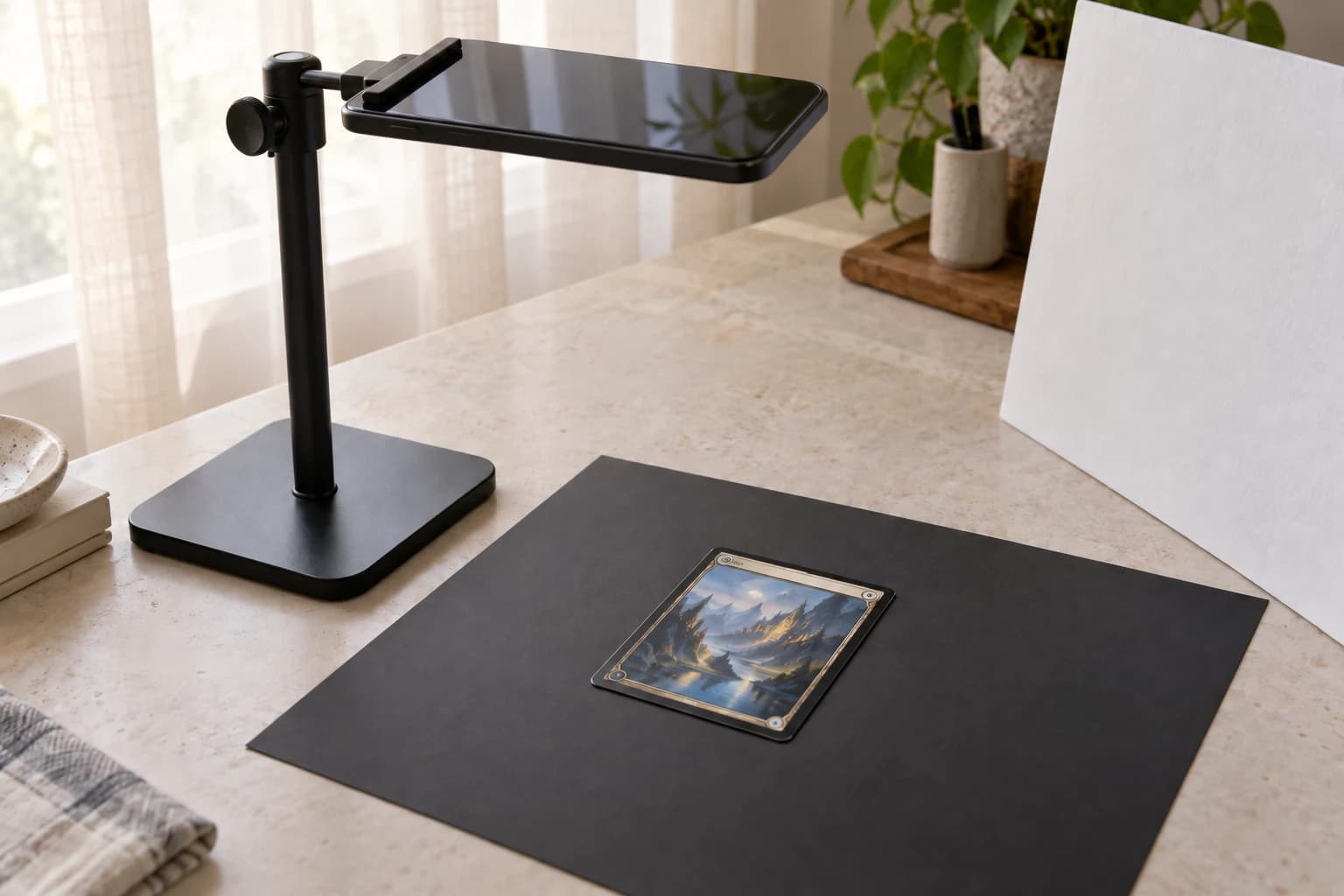
Photograph the front and back, note the set, card number, condition, purchase date, and where it is stored. For graded cards, record the grading company and certification number.
Keep receipts and important correspondence in a separate digital folder. If the collection becomes materially valuable, check what your home policy actually covers and whether specialist cover or a professional appraisal is appropriate.
Do not publish a complete inventory together with your home address or detailed storage location.
Pack for movement, not convenience
Moving and shipping create more risk than quiet storage. Keep the card sleeved and supported, prevent the holder from sliding inside the package, and use a rigid box with cushioning around the protected card.
Follow the recipient's instructions. Grading companies and auction houses may require a particular holder or packing order. A setup that is excellent on your shelf may be wrong for their intake process.
For the rest of the collection, our long-term storage guide covers light, climate, handling, and choosing a safe place in more detail.
The goal is not to make the card impossible to enjoy. It is to remove avoidable risk so that handling, viewing, and ownership can remain a pleasure.