How to store Pokémon cards
Pokémon collections grow quickly. A few cards from a set become a binder, a box of duplicates, and a small group of favourites you worry about more than the rest.
The easiest way to store them is not to treat every card alike. Build a simple system around how much a card matters to you and how often you want to see it.
Start with a clean sleeve
Handle cards with clean, dry hands and work on a clear table. Hold each card by the edges rather than pressing a thumb into the artwork.
Any card you want to keep should go into a soft, correctly sized sleeve. The sleeve protects the surface from fingerprints and from rubbing against the next layer of storage. Look for a reputable product described as PVC-free and made for standard trading cards.
Insert the card gently. If the fit is tight enough to bow the card or catch a corner, use a different sleeve.
Separate the collection by purpose
You only need three broad groups:
- Set and character collections belong in a binder where they can be viewed in order.
- Favourite or valuable raw cards deserve a sleeve plus a rigid or semi-rigid holder.
- Duplicates and bulk can be stored upright in a properly sized card box, without being packed so tightly that edges are crushed.
This keeps the binder enjoyable and stops expensive storage from being wasted on cards you are likely to trade or give away.
Use a binder for the collection you want to see
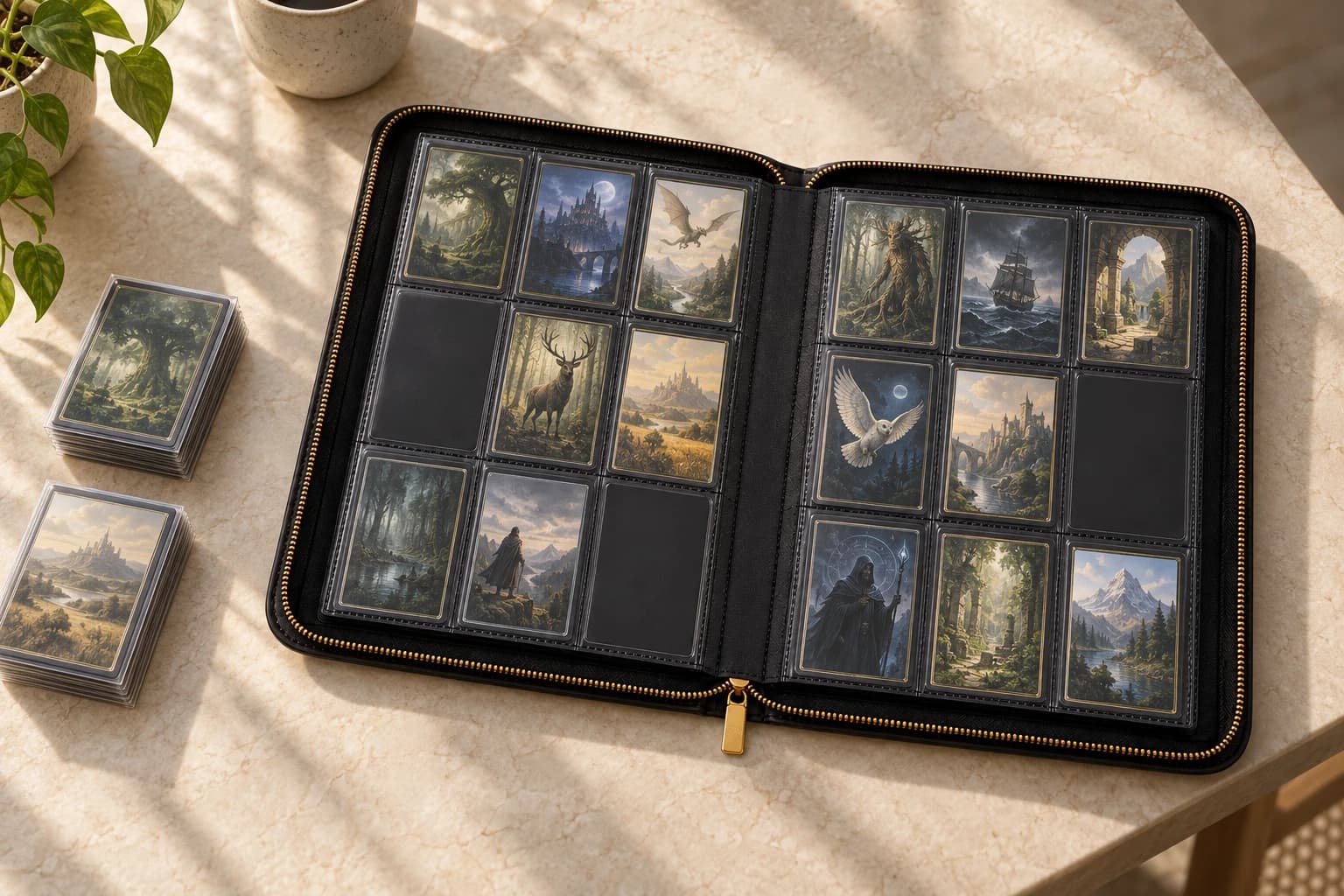
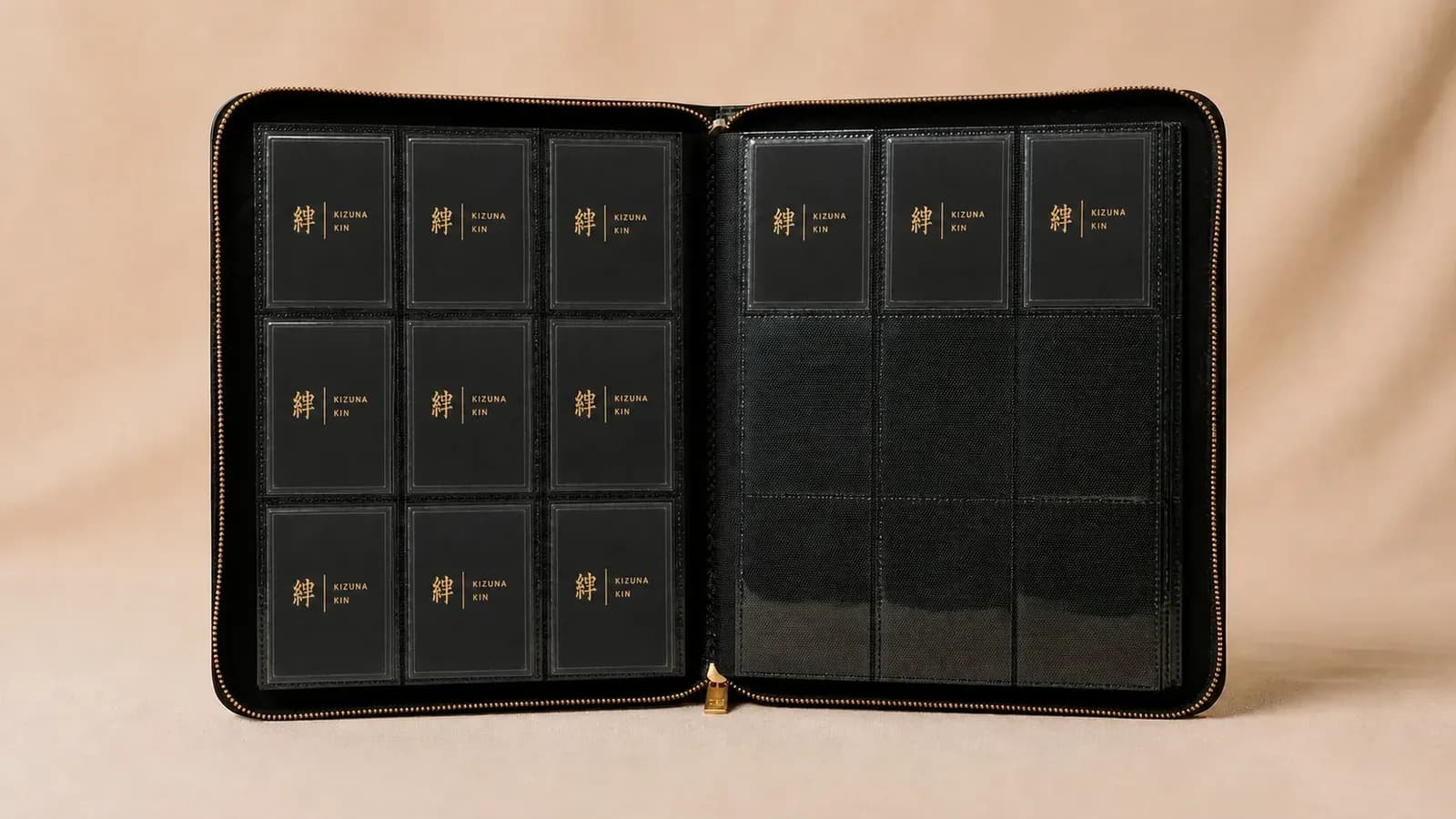
A ringless binder with fixed, side-loading pages is a practical home for sets, illustration collections, and favourite Pokémon. Sleeve each card first and use one card per pocket.
Do not double cards back-to-back in a pocket. It hides the reverse, stretches the pocket, and adds pressure when the binder closes. Leave a little room for future additions so one new card does not force you to move an entire set.
If you are building a master set, decide at the beginning whether reverse holos and variants will sit beside the standard card or in their own section. Consistency matters more than the system you choose.
For a fuller binder setup, see our guide to storing a collection in a binder.
Give special cards another layer
For a valuable pull, promotional card, or vintage favourite, place the sleeved card in a rigid toploader or semi-rigid holder. A rigid holder offers more protection against bending and knocks; a semi-rigid holder is slimmer and is commonly used when cards are prepared for grading.
The sleeve still matters. A bare card should not be placed directly into a rigid holder, where the surface can rub against the plastic.
If you want these protected cards in one browsable place, use a binder made specifically for toploaders. A standard binder pocket is not designed to hold a rigid holder, and forcing one in can damage the page and put pressure on the card.
Keep Pokémon cards away from light and damp
Good storage is mostly about the room. The Library of Congress recommends a cool, relatively dry, clean, and stable environment for works on paper, with minimal light and distance from radiators and vents.
For a home collection, that means:
- Avoid attics, garages, basements, and storage sheds.
- Keep binders and boxes away from windows and direct sun.
- Do not store cards on the floor, where a small leak becomes a large problem.
- Choose an interior cupboard or supported shelf in a comfortable room.
Light damage is cumulative and irreversible, so display cards for enjoyment but return them to dark storage when they are not being viewed.
Store binders without strain
Keep a binder upright with support on both sides, or lay it flat on a clear shelf. Do not leave it leaning at an angle or underneath a heavy stack.
A zip closure helps keep dust away and protects page edges when the binder is moved. It is useful everyday protection, not permission to keep the binder near drinks or damp.
The best Pokémon card storage system is the one you will actually maintain: sleeve new pulls, separate bulk from the collection, give special cards more structure, and keep everything in a steady room away from sunlight.