How to store trading cards long-term without damage
Cards rarely become damaged all at once. More often, it happens slowly: a little sunlight, a damp room, a sleeve that was not as safe as it looked.
The good news is that long-term storage does not need to be complicated. A few sensible habits will do most of the work.
Start with a good sleeve
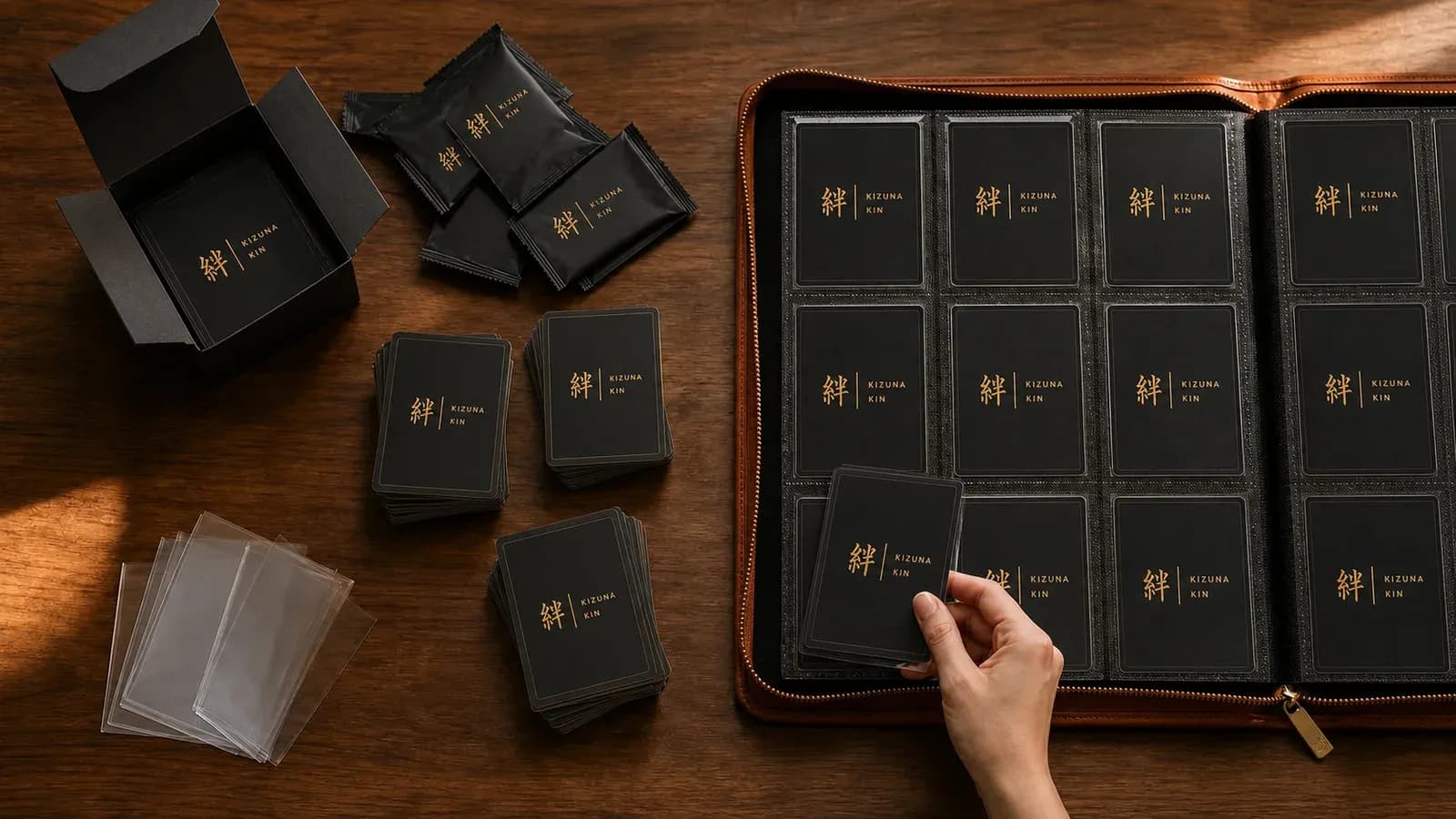
For cards you want to keep, use a clean, PVC-free sleeve. Polypropylene and PET are commonly used because they are stable and do not rely on the softening agents found in PVC.
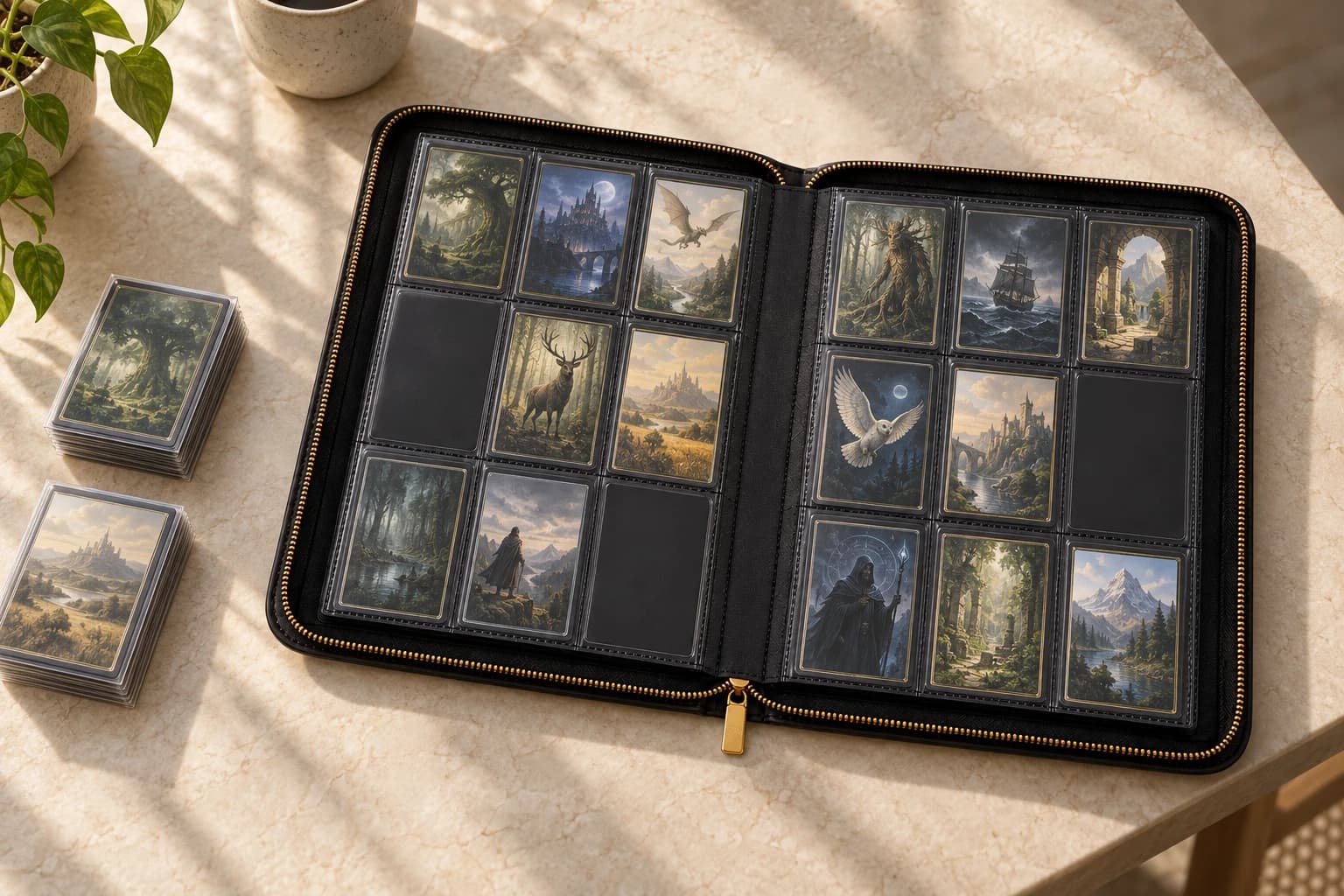
Valuable cards can be placed in a sleeve and then a rigid holder or side-loading binder pocket. The sleeve protects the surface; the outer holder protects the shape.
Avoid squeezing a card into anything too tight. Protection should feel secure, not forced.
Keep the room steady
Paper responds to the air around it. High humidity can encourage warping and mould, while very dry conditions can make paper more brittle. Sudden changes are also hard on cards, especially foils.
You do not need a museum room. Aim for a comfortable, stable indoor space:
- Keep the collection away from damp areas.
- Avoid radiators, air-conditioning vents, and hot windows.
- Use a small hygrometer if the room often feels humid.
- Never store cards in an attic, garage, or shed.
If you live in a humid climate, air conditioning or a dehumidifier will help far more than scattering loose packets of silica gel around the collection.
Treat light as display time
Daylight fades print. Direct sun does it fastest, but bright indirect light also adds up over the years.
Store cards in the dark when they are not being viewed. If you display a favourite, keep it away from the window and consider rotating it with other cards instead of leaving the same one exposed every day.
UV-filtering frames can reduce exposure, but they do not make sunlight harmless.
Choose the storage place carefully
A bedroom shelf or interior cupboard is usually better than a basement or storage unit. Keep the collection raised off the floor, away from exterior walls, and somewhere you would quickly notice a leak.
Boxes should be clean and dry. Binders should be supported so they are not leaning at an angle. Whichever format you use, do not pack it so tightly that cards are under pressure.
Handle cards normally, but carefully
Clean, dry hands are usually best. Hold a card by the edges and work over a clear surface so a dropped card has somewhere safe to land.
There is no need to keep removing a card to check it. Once it is clean, sleeved, and stored well, leaving it alone is part of the protection.
Long-term care is mostly about consistency. Use safe materials, avoid heat and sunlight, and keep the collection in a room where you would be comfortable spending time yourself.