How to Build a Trade Binder You’ll Actually Use
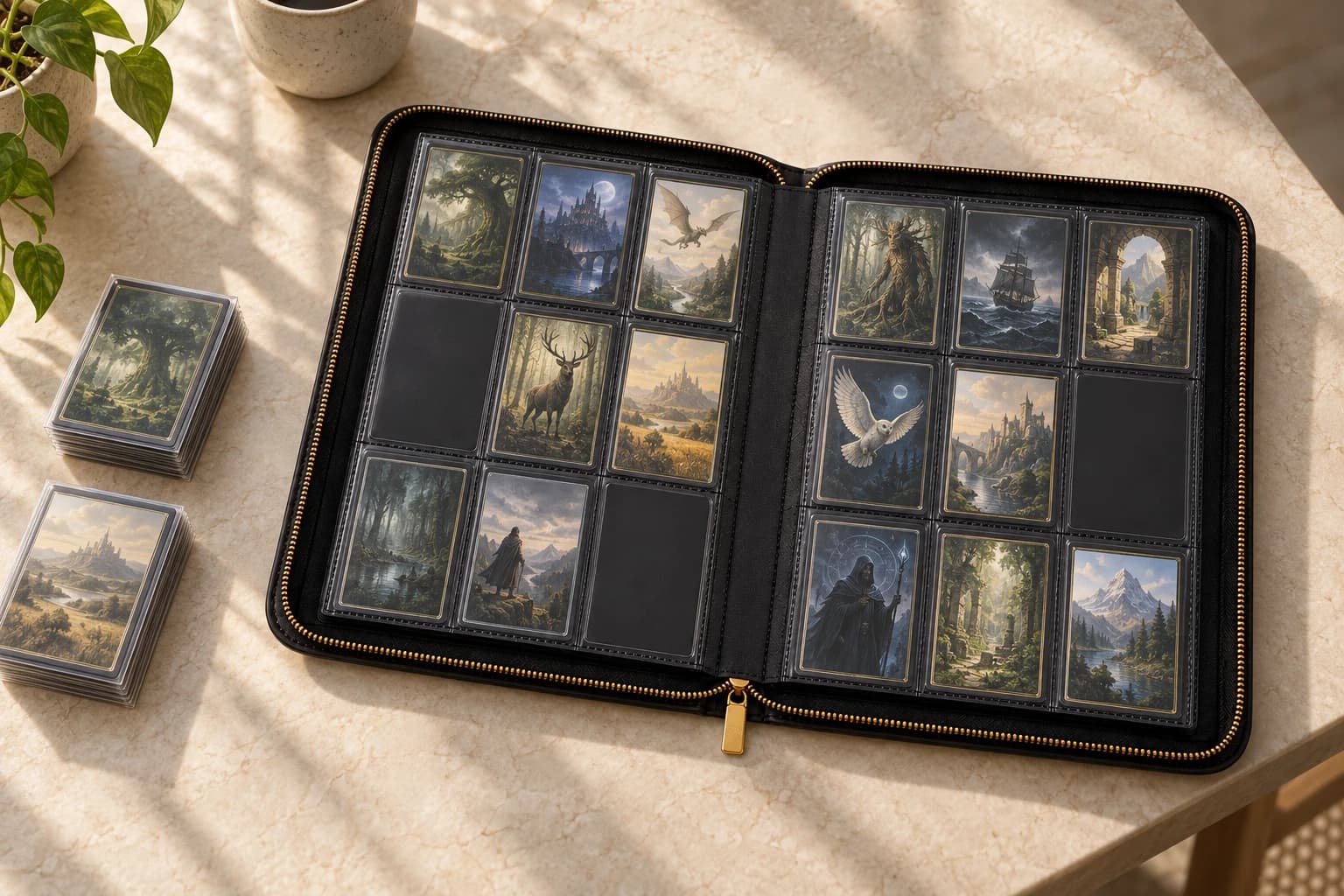
A good trade binder makes a conversation easier. Someone opens it, understands what is available, and finds a few cards they would like to ask about. You can find those cards again without searching through boxes or remembering which copies you promised to someone else.
Start with a binder you can maintain. It does not need to contain every spare card you own, and it does not need to be full.
Put in cards you are comfortable trading
Before arranging pages, separate your cards into three groups: available to trade, staying in the collection, and undecided.
Put the first group in the trade binder. Keep the other two elsewhere. If a card has a particular memory attached to it, you do not need to find a price that explains why you want to keep it.
This also makes the binder easier for someone else to browse. They can ask about what they see without discovering that most of the page is unavailable. You can still decline a trade; making a card available does not commit you to accepting an offer.
Choose an order someone else can follow
Choose one main sorting rule and use it consistently. For a binder containing several games, start with a separate section for each game. Within a section, use set, card type, character, or another division that makes sense to the people you trade with.
For example, a Pokémon trade binder might move from recent sets to older sets, with promos grouped at the end. A Magic binder could use colour as its main division. Neither system needs to be perfect; it needs to be recognisable.
Avoid rearranging every page whenever one card leaves. Leave a little space within each section so new additions can go somewhere sensible. Our nine-pocket page layout ideas offer starting points if you want the pages to feel more deliberate.
Show duplicates without crowding pockets
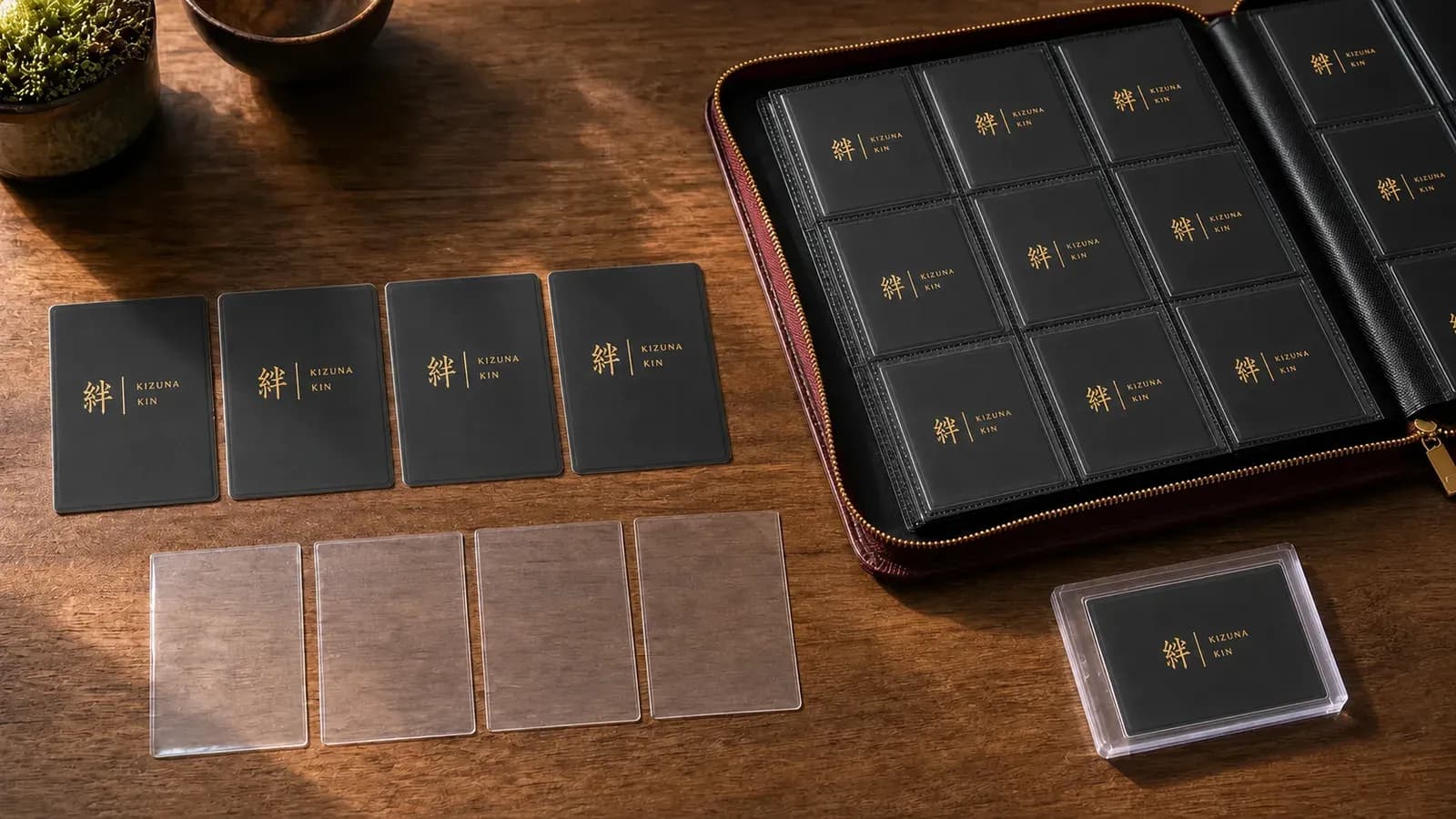
Use one sleeved card in each pocket. If you have several copies available, keep the extras in suitable separate storage and record the quantity in a note.
A simple entry might read: card name, set number, three available, extras in the blue storage box. This is more useful than hiding a stack behind the visible copy.
Check that each sleeved card fits comfortably. A page should turn without resistance, and the binder should close naturally. For the basic handling routine, see how to store a card collection in a binder.
Know which version you are offering
Before a meetup, check the details that distinguish one copy from another: set, collector number, language, finish, and visible condition. Similar artwork does not always mean the same version.
Keep notes about wear beside your inventory entry. Describe what you can see, such as edge whitening or a surface scratch, rather than relying on a confident label alone. TCGplayer’s condition overview is a useful shared reference, although both people should still inspect the actual card.
If you use recent sales to discuss a trade, compare the same printing and a similar condition. Treat an old price note as a reminder to check, not a fixed value that must still apply.
Make room for an unhurried conversation
At the table, agree before taking cards out of another person’s binder. Keep each person’s cards in a separate area while you discuss an exchange, and return anything you are not trading to its original place.
A short want list helps. It gives the other collector a starting point without requiring either of you to search every page. Include specific versions where that matters to you.
If a trade feels rushed or you cannot agree about condition, it is fine to leave it. The binder will be there for another conversation.
Reset it after each session
Spend a few minutes putting the binder back in order when you get home.
- Remove traded cards from your inventory and update duplicate quantities.
- Put new arrivals into the personal collection or the trade section where they belong.
- Check that any cards handled during the session are seated properly in their sleeves.
- Review reserved cards so they are not accidentally offered twice.
- Leave useful gaps instead of rebuilding the entire binder.
For taking the binder to a shop or event, our guide to travelling with trading cards covers the journey.
Over time, the empty pockets become part of the story: cards that moved on, conversations you enjoyed, and room for whatever you find next.