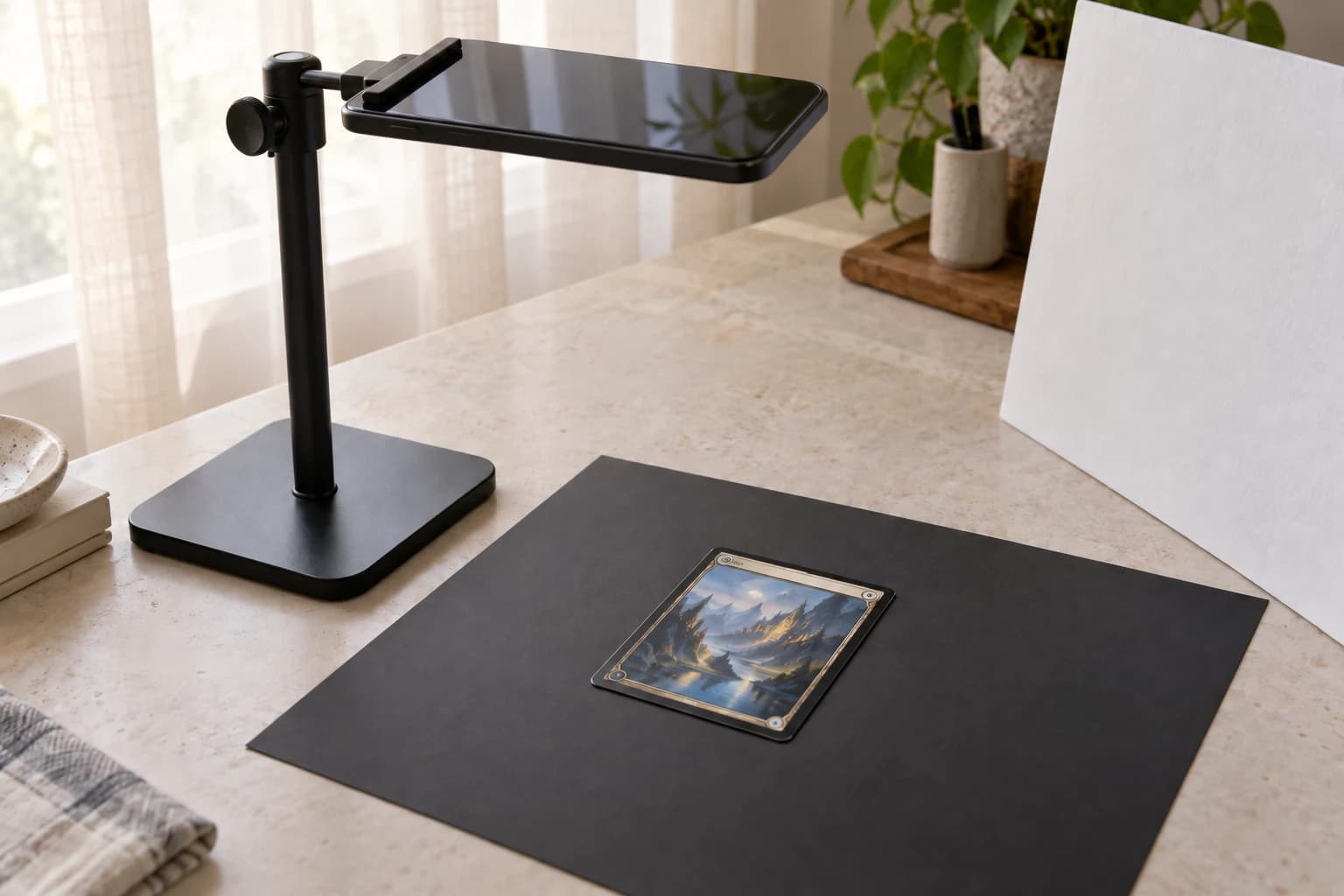
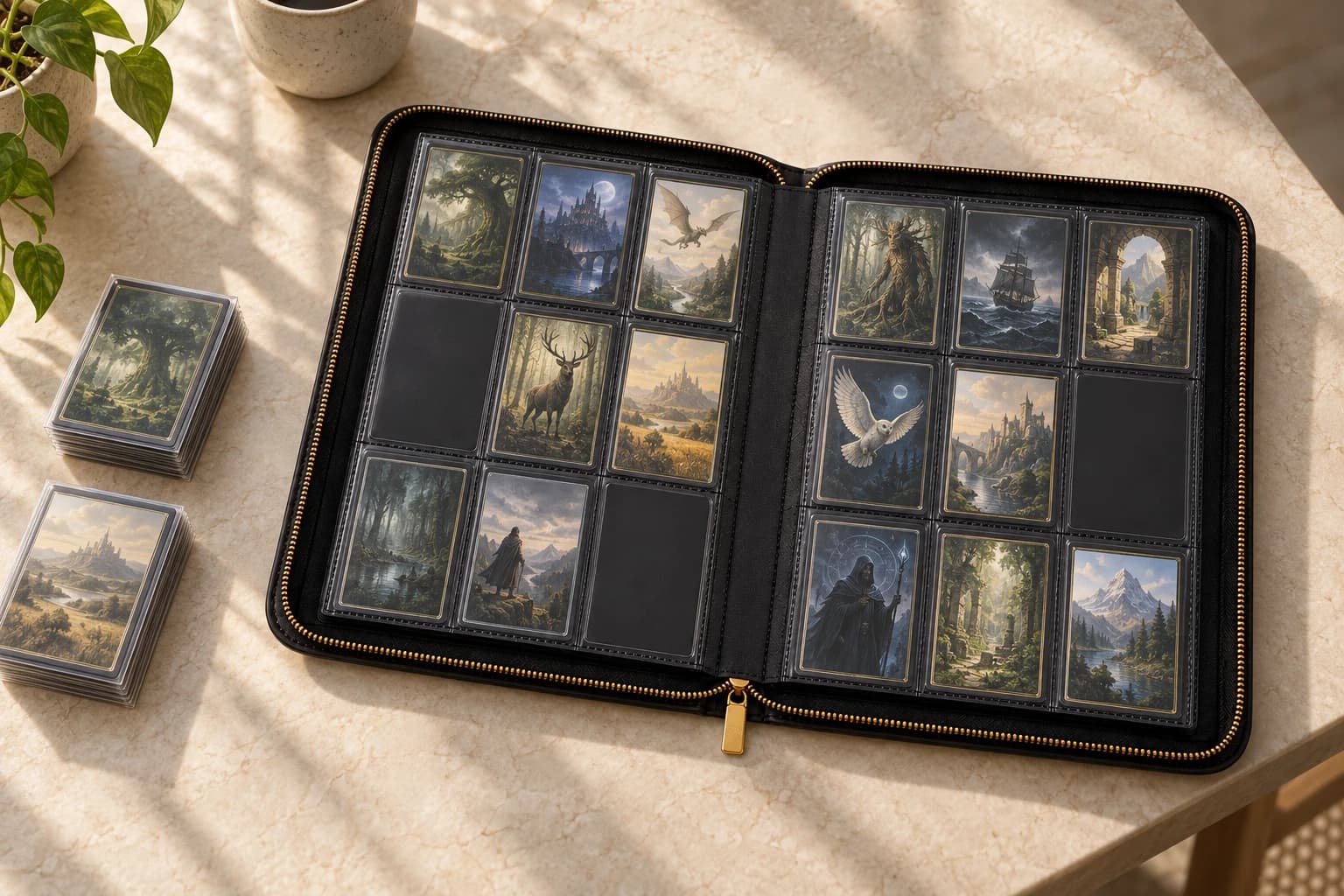
Do Pokémon, One Piece, Magic, and sports cards fit the same binder?
The short answer is yes for most standard modern cards, but not for every card made by those hobbies.
Pokémon, One Piece, Magic: The Gathering, and modern sports cards generally use the same standard trading-card footprint. That is why the same standard sleeves, nine-pocket pages, and many fixed-page binders can work across all four collections. The important exceptions are not usually the game name. They are the sleeve around the card, the card's thickness, and whether the release is standard, mini, oversized, or already inside a rigid holder.
The common standard footprint
Bandai lists One Piece Card Game cards at 63 × 88 mm in an official Premium Bandai product specification. Officially licensed Ultra PRO sleeves for Pokémon and Magic: The Gathering describe the cards they protect as the standard 2.5 × 3.5 inch size, approximately 63.5 × 88.9 mm.
Topps uses the same 2.5 × 3.5 inch measurement for the modern standard sports-card format. The small difference between 63 × 88 mm and the inch conversion reflects the way manufacturers and accessory makers state the familiar standard, not a separate binder category.
In practical terms, a well-sized standard-card binder can usually hold sleeved standard cards from all four hobbies.
A sleeve changes the dimensions
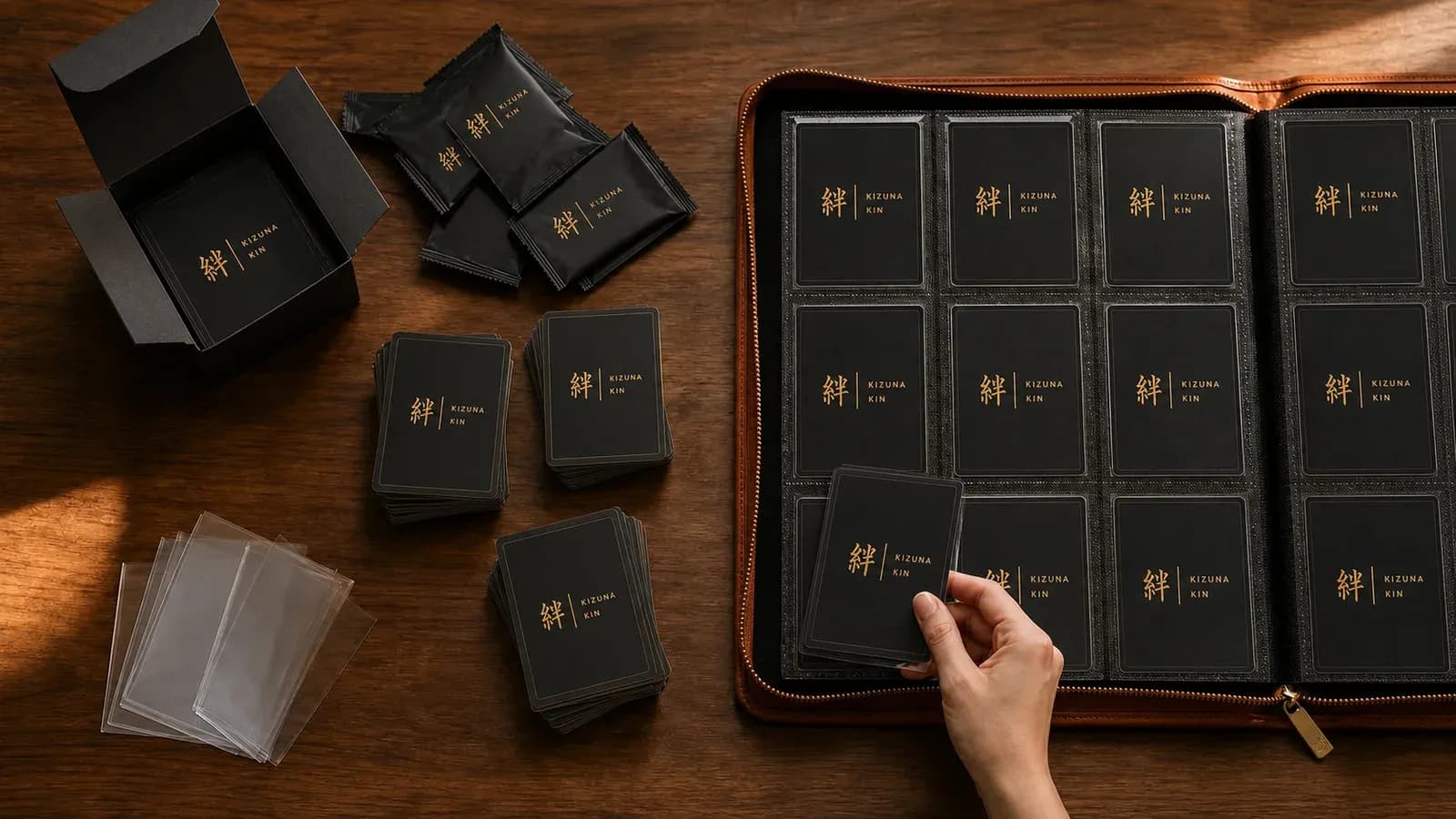
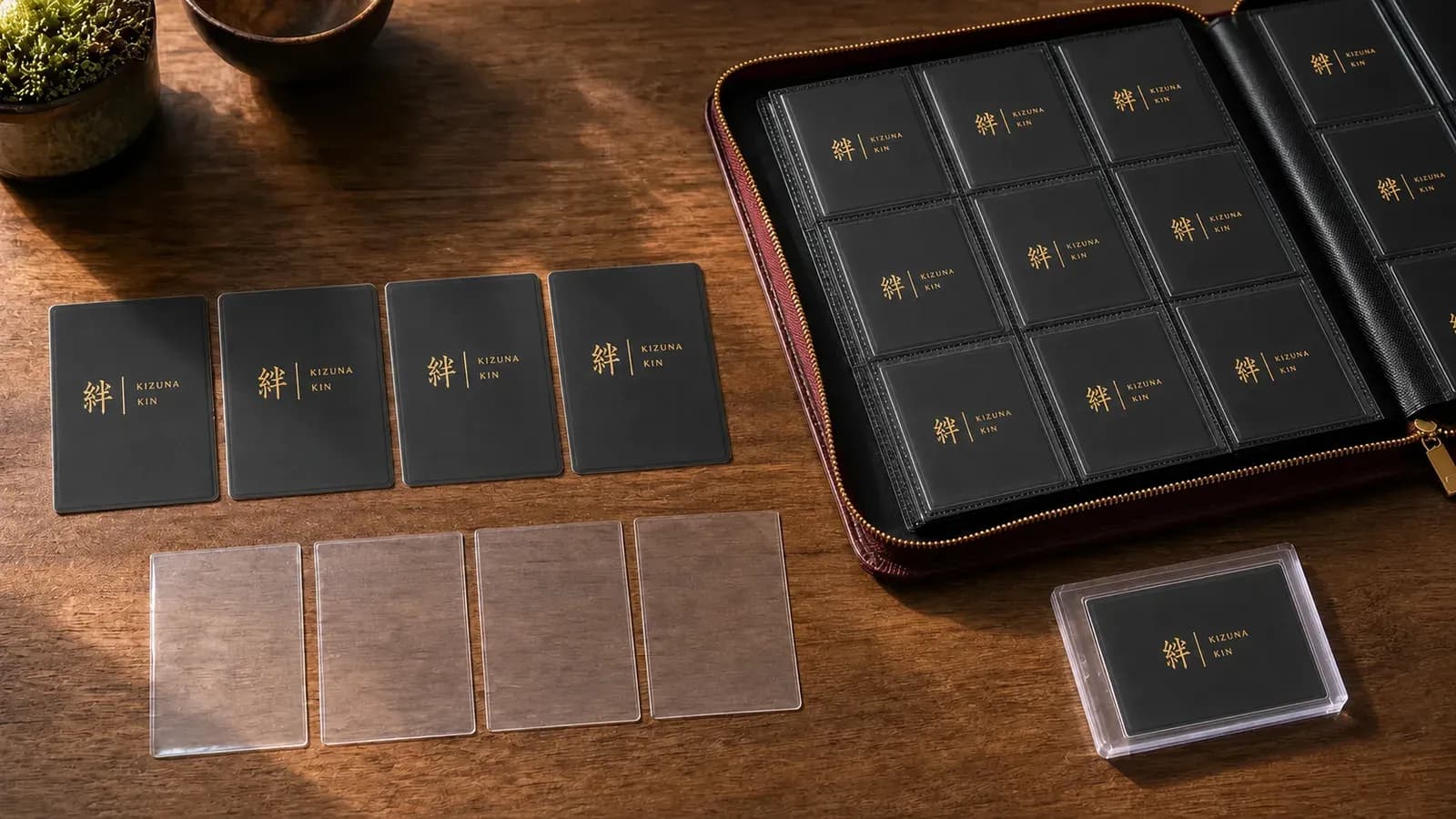
The binder pocket does not hold only the card. It holds the card plus its sleeve. A standard card may be about 63–64 mm wide, while the sleeve is wider and taller. Double-sleeving adds another outer layer and can change both clearance and thickness.
Check the outer dimensions of the exact sleeve you use. Do not assume every product labelled standard has identical tolerances. A sleeve should enter the pocket with light, even resistance. If the sleeve catches at the opening, wrinkles at the side, or forces the page to bow, the fit is too tight even if the bare card would fit.
Thickness is a separate measurement
Length and width tell only part of the story. Most Pokémon, One Piece, and Magic cards are comparatively thin cardstock, and many standard sports cards are similar. Sports sets can also contain memorabilia, patch, acetate, metal, layered, or other thick inserts.
PSA defines its standard trading-card holder around a 2.5 × 3.5 inch card up to 40 points thick, and explains that standard-size cards thicker than 40 points require a different holder. That is a useful reminder: two cards can have the same face dimensions and still require different storage.
Do not push a thick relic or patch card into a normal binder pocket. Pressure can distort the page, compress the card's edges, or make neighbouring pockets sit unevenly. Use a protector made for the card's measured point thickness, then store it in a compatible rigid-holder case or binder if desired.
Oversized, mini, and unusual cards are exceptions
Promotional jumbo cards, box toppers, postcards, stickers, vintage sports issues, mini inserts, and booklet cards can fall outside the standard footprint. Some graded slabs and toploaders are designed around standard cards but are much larger than an ordinary sleeve.
A product described as a standard-card binder should not be expected to hold these formats. They need pages or holders made for their actual dimensions. PSA's holder-size reference lists several larger categories and notes that cards and tickets vary in size.
Pocket dimensions matter more than the game label
When comparing binders, look for the usable pocket size rather than a long list of compatible games. The pocket needs enough room for your chosen sleeve, a smooth opening, and a seam that does not press on the card edge.
The page material and loading direction matter too. Side-loading pockets can reduce the chance of a sleeved card moving out when the binder is upright, but side-loading alone does not guarantee a good fit. The card still needs to lie flat, and the binder needs enough page clearance when it is full.
For more on construction choices, see ring binders versus fixed-page binders.
Use a simple fit check
Test the exact combination of card, sleeve, and pocket before filling the binder. A compatible fit should pass these checks:
- The fully sleeved card enters without force
- The sleeve does not wrinkle, curl, or catch on the seam
- The card lies flat once seated
- The corners do not press into the pocket edges
- The page remains flat with cards in neighbouring pockets
- The binder closes and zips without compressing the pages
If one of these fails, change the sleeve or storage format. Do not trim a sleeve, stretch a pocket, or assume the page will loosen safely with use.
Can one binder hold several games?
Physically, yes: standard sleeved cards from Pokémon, One Piece, Magic, and sports collections can share a compatible standard-card binder. Whether they should share one is an organizational choice.
A mixed binder can work well for favourite artwork, sentimental cards, or a compact collection spanning several interests. Separate binders are easier when each game is growing into a master set, when the collections use different sleeve systems, or when thick sports cards need their own storage.
If you collect several properties, give each section a clear beginning and keep a simple index. The guide to organizing trading cards across multiple binders helps decide when one mixed volume should become several focused ones.
The useful answer is standard, not universal
The shared footprint is convenient: it lets collectors use one well-considered binder format across many modern card hobbies. But compatibility should always be tested with the protected card that will actually enter the pocket.
Standard Pokémon, One Piece, Magic, and sports cards are usually straightforward. Thick relics, oversized promos, unusual vintage formats, rigid holders, and double-sleeved combinations deserve a separate check. Measure the exception, never force the fit, and let the collection determine the storage rather than the logo on the pack.