Binder vs toploader binder: which should you use?

A standard binder and a toploader binder can look similar on a shelf, but the cards inside are stored very differently.
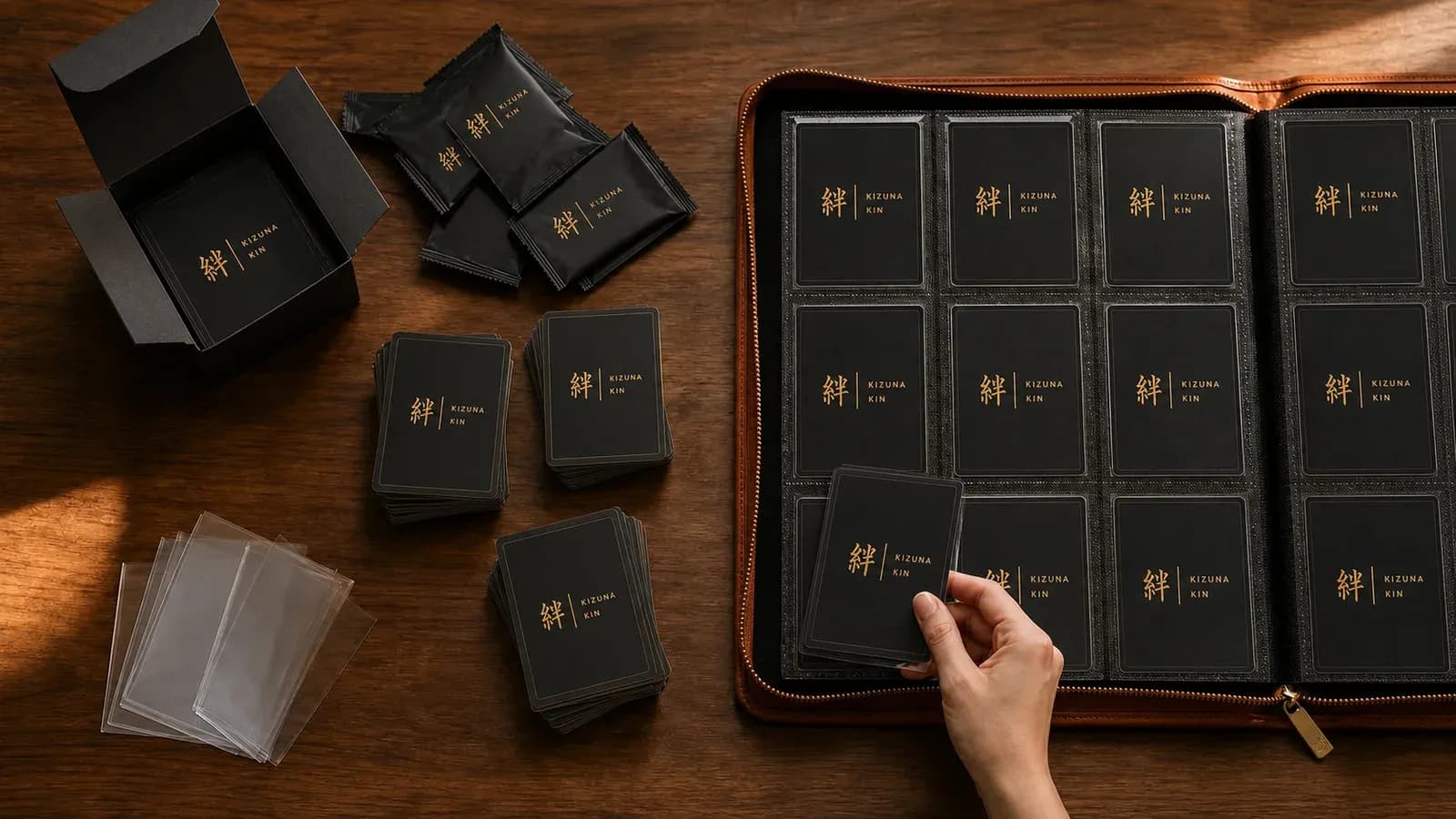
In a standard binder, a sleeved card goes directly into the page pocket. In a toploader binder, the card is sleeved, placed inside a rigid toploader, and then the whole holder goes into an oversized pocket.
Neither option is automatically better. The right choice depends on whether you value capacity and easy viewing, or added structure around individual cards.
When a standard binder makes sense
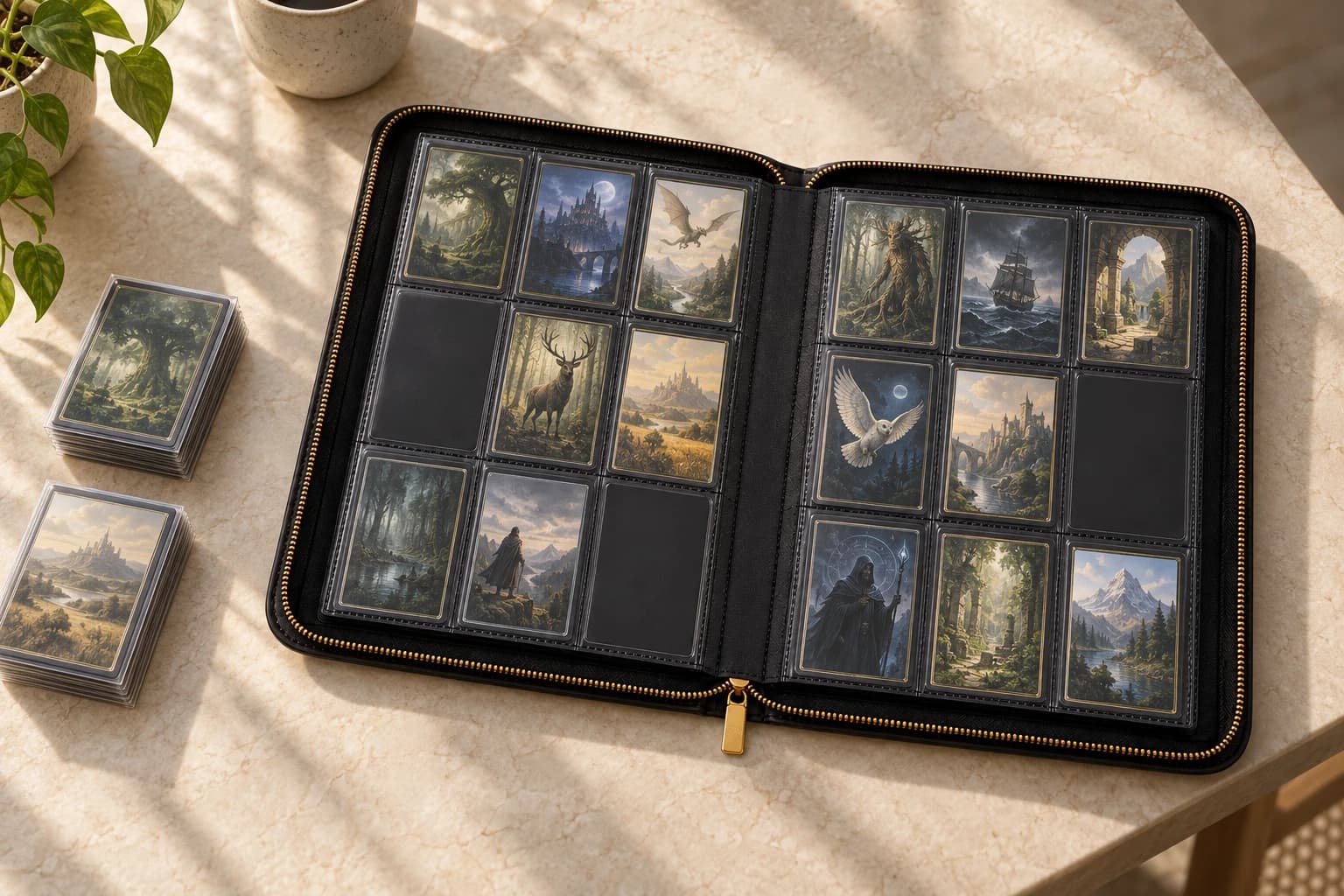
A standard binder is usually the better choice for complete sets, character pages, artist collections, and cards you want to browse often.
Its advantages are straightforward:
- More cards fit into a smaller, lighter binder.
- Pages turn easily and the collection reads as one continuous sequence.
- Empty pockets can be left for missing cards.
- Sleeved cards can be moved without handling the surface directly.
Choose a ringless design with fixed, side-loading pages. The card should sit flat, the pages should turn without pulling at the spine, and the cover should close without needing pressure.
A standard binder still offers meaningful protection. It simply relies on the page and outer structure rather than giving every card its own rigid shell.
When a toploader binder makes sense
A toploader binder is useful for a smaller group of valuable raw cards: vintage holos, rare pulls, signed cards, or anything you already keep in a rigid holder.
The rigid toploader adds resistance against bending and local pressure. The binder then keeps those holders organised and prevents them from becoming a loose stack in a box.
The trade-offs are equally clear:
- Toploader binders are larger and heavier.
- They hold fewer cards.
- Oversized pages can feel less elegant to turn.
- Cards need more layers, which adds cost and time.
A toploader also does not replace the inner sleeve. Place the card in a soft sleeve first, then into the rigid holder.
Which protects cards better?
Against bending and knocks, a correctly fitted toploader offers more structure around one card. Against dust, page movement, and ordinary handling, a well-made standard binder is often enough for most of a collection.
Neither format protects a card from a poor room. Heat, humidity, leaks, and sunlight can reach cards in both. The Library of Congress notes that light damage is cumulative, so even a rigid holder should not be treated as UV protection unless the product specifically states and verifies it.
The binder also needs to fit the holder. Never push a toploader into a standard card pocket or place a bare card in an oversized toploader pocket.
What about grading submissions?
A toploader binder is for storage, not preparation for every grading service. PSA currently asks submitters to place each card in a clear penny sleeve and then a semi-rigid holder, and specifically says not to submit cards in toploaders. Always check the current instructions of the grading company before packing a card.
You can read PSA's current shipping guide here.
The practical answer is often both
Most collectors do not need to choose one format for everything.
Use a standard binder for the collection as a whole: the set, the story, and the pages you enjoy turning through. Use rigid holders or a toploader binder for the smaller group where extra structure is useful.
That approach avoids filling a very large binder with ordinary cards while still giving valuable raw cards the protection you want. If you are starting with a standard binder, our binder storage guide covers sleeves, capacity, organisation, and shelving in more detail.
The better binder is the one suited to the cards inside it — not simply the thickest one.