How to plan a master set in a 360-pocket binder
A master set looks simple when it is finished: one sequence, complete pages, and a place for every card. Building it is less simple. Numbered cards are joined by parallels, reverse foils, alternate artwork, secret cards, promotional releases, and variations that may appear after the main set launches.
A 360-pocket binder offers a generous amount of space, but 360 is a hard limit. The best time to discover that your version of the set needs 388 pockets is before you place the first card.
Decide what “master set” means to you
There is no single definition that works for every card game or collector. Some people mean every card in the numbered checklist. Others include every standard parallel. A more expansive version may include promotional cards, stamped versions, alternate artwork, prize cards, or regional variations.
Write your definition in one sentence before counting:
- Every numbered card only.
- Every numbered card plus its standard parallel.
- Every card associated with the release, including promos.
- One copy of every artwork, without repeating minor production variations.
- A personal master set that excludes cards you do not enjoy or cannot reasonably obtain.
The last option is still a real collection. A master set should be deliberate, not an obligation created by someone else’s checklist.
Build the checklist before the binder
Start with the official numbered set list when one is available. Then add the categories that fit your definition.
Count each physical card you want to place:
- Numbered base cards.
- Standard parallels or reverse versions.
- Secret-numbered and alternate-art cards.
- Promotional cards tied to the release.
- Tokens, energy cards, checklists, or inserts you intend to include.
- Known future cards for which you want to reserve space.
Do not count a category simply because it exists. Decide whether it belongs in your master set first.
If the release has 172 base cards, 160 parallels, and 12 associated promotional cards, the plan requires 344 pockets. It fits inside a 360-pocket binder, but leaves only 16 positions for later additions. If another 20 promos are expected, the set has already outgrown that plan.
The calculation is not exciting, but it prevents a great deal of unnecessary card movement.
Understand the 360-pocket layout
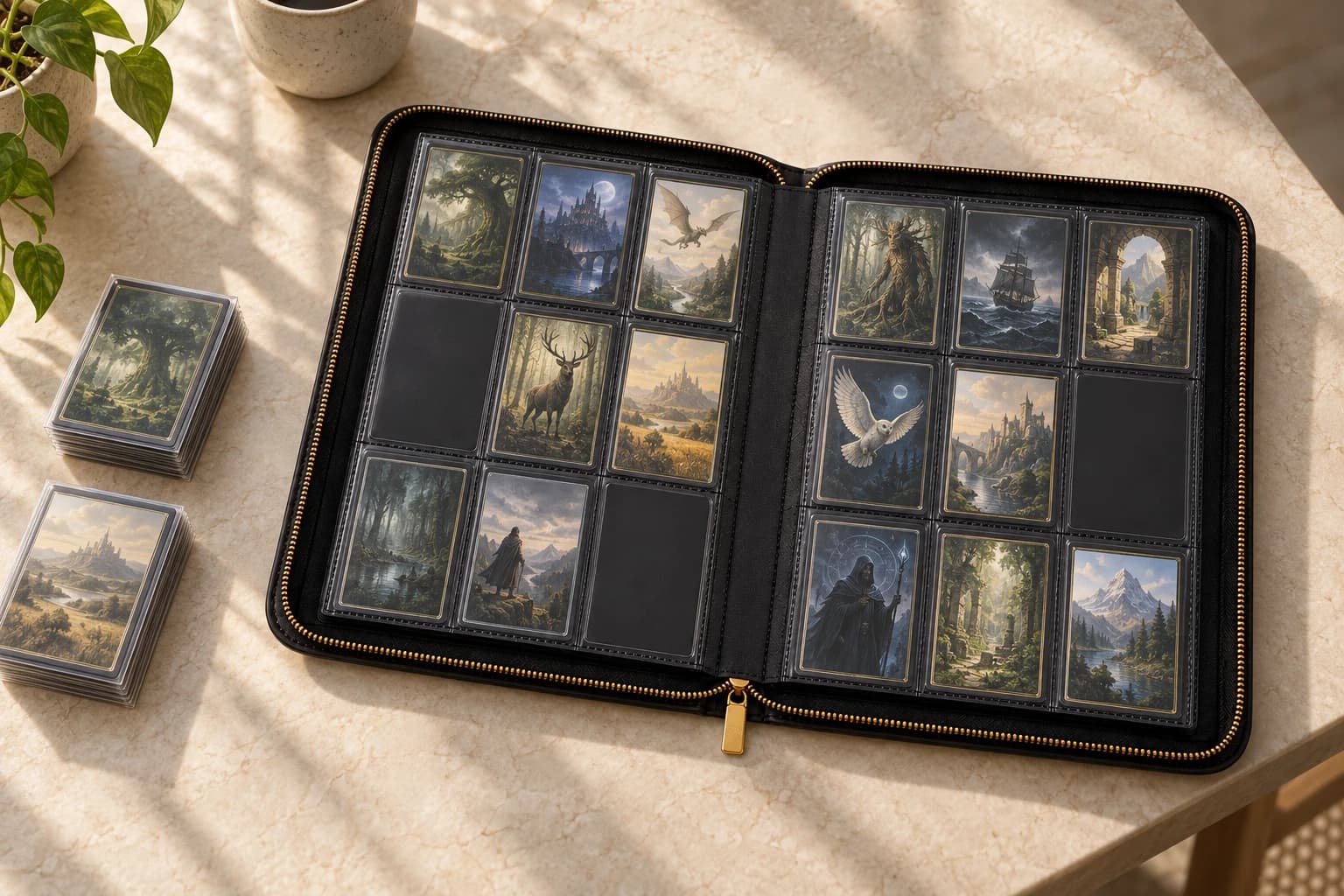
A typical 360-pocket binder has 20 physical page leaves. Each leaf holds nine cards on the front and nine on the back:
- 20 page leaves
- 40 visible page faces
- 9 pockets per face
- 360 card positions in total
Treat those as 360 individual positions, not 720. Placing two cards back-to-back in one pocket can stretch the pocket, add pressure, and hide the reverse of both cards.
The nine-pocket grid also affects how a set reads. Cards appear in rows of three and pages of nine. A set number that ends at 181 will use twenty full page faces plus one position on the next face. Knowing that in advance helps you decide where the following section should begin.
Choose a layout system
There are three useful ways to arrange base cards and variants.
Base set followed by variants keeps the numbered set uninterrupted. Once the base set ends, the parallel run begins in the same number order. This is simple to maintain and usually uses pages efficiently.
Facing-page variants place base cards on one page face and their parallel versions on the facing face. The comparison is satisfying when the release has a consistent parallel for nearly every card, but missing variants remain visually obvious.
Grouped card-by-card places each base card beside its variants. This works for small releases with only one or two versions per card. In a three-column row, however, irregular variant counts can make the page order difficult to follow.
Choose one rule and use it throughout. Consistency matters more than finding a theoretically perfect layout.
Map the pages before moving cards
Use a plain checklist or spreadsheet to assign sections by page face.
For example:
- Faces 1–20: numbered base set.
- Faces 21–38: standard parallels.
- Face 39: secret cards.
- Face 40: promos and reserved positions.
The exact numbers will differ, but the map reveals whether a section ends cleanly or spills into the next. It also shows where a deliberate blank face may improve the collection.
You do not need a label inside every empty pocket. If a missing position is difficult to remember, use a plain archival-safe placeholder or keep the note in the checklist rather than inserting ordinary paper with unknown ink directly against a card.
Leave visible space for missing cards
A missing card should have a location from the beginning. If you compress the collection each time something is absent, every new acquisition creates another reorganization.
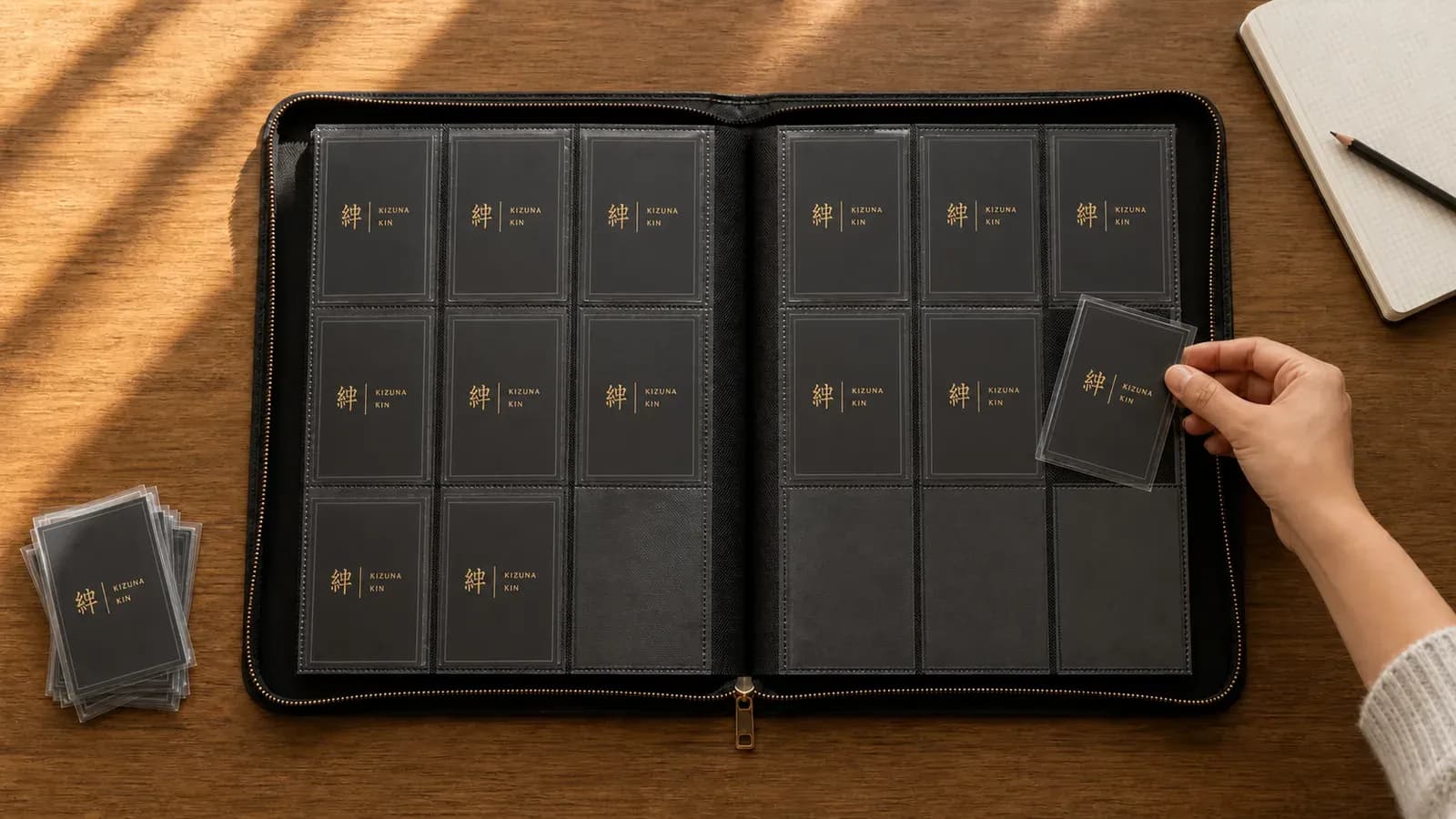
Place the cards in their final numbered positions and leave missing pockets empty. This preserves the set order and gives you an immediate visual checklist when opening the binder.
For expensive missing cards, an empty pocket can also be useful discipline. It keeps the goal visible without encouraging a rushed purchase simply to finish the page.
Plan for promos that arrive later
Promotional cards are one of the easiest ways for a master-set plan to fail. They may release over months through events, products, magazines, tournaments, or regional campaigns.
If promos are part of your definition, give them a separate final section and reserve more space than the current checklist requires. A run of nine empty positions is often more useful than scattering speculative gaps throughout the numbered set.
When new cards arrive, add them chronologically, by promotional number, or by artwork family. Pick one method and record it.
Know when one binder is not enough
Do not force a set into 360 pockets simply because the binder has that number on its specification.
If your planned count is close to capacity, consider:
- Base set in one binder; parallels and promos in another.
- Main release in one binder; later associated products in another.
- One complete numbered set plus a separate favourites binder for alternate artwork.
- A narrower personal definition that includes the versions you genuinely care about.
Our guide to organizing a collection across multiple binders can help keep those divisions clear.
Fill the binder carefully
Once the plan is stable, work on a clean table and handle sleeved cards by the edges. Insert one card per pocket without forcing tight sleeves or catching corners. Fill a few page faces at a time and check that the sequence remains correct before continuing.
The broader binder storage guide covers handling, page loading, capacity, and shelving.
A master set feels complete because every position was considered, including the empty ones.
Planning first does not take the pleasure out of building a set. It protects that pleasure from becoming a repeated exercise in moving hundreds of cards. Count the collection, define its edges, map the pages, and leave enough room for the set to become what you intended.