How to prepare trading cards for grading
Grading can make a card easier to protect, insure, sell, and understand. It can also turn a simple card into a small project: inspection, paperwork, packaging, shipping, waiting, and finally storage. The best preparation is not dramatic. It is slow, clean, and careful.
The goal is not to improve the card. The goal is to avoid damaging it before it reaches the grader.
Decide whether the card is worth grading
Not every good card needs a slab. Some cards are better kept raw because the cost, time, and risk of grading do not add enough value or enjoyment. Before submitting, ask a few practical questions:
- Is the card valuable enough to justify grading fees, shipping, and insurance?
- Would a lower grade still make sense for the card?
- Is the card easier to sell, insure, or display if graded?
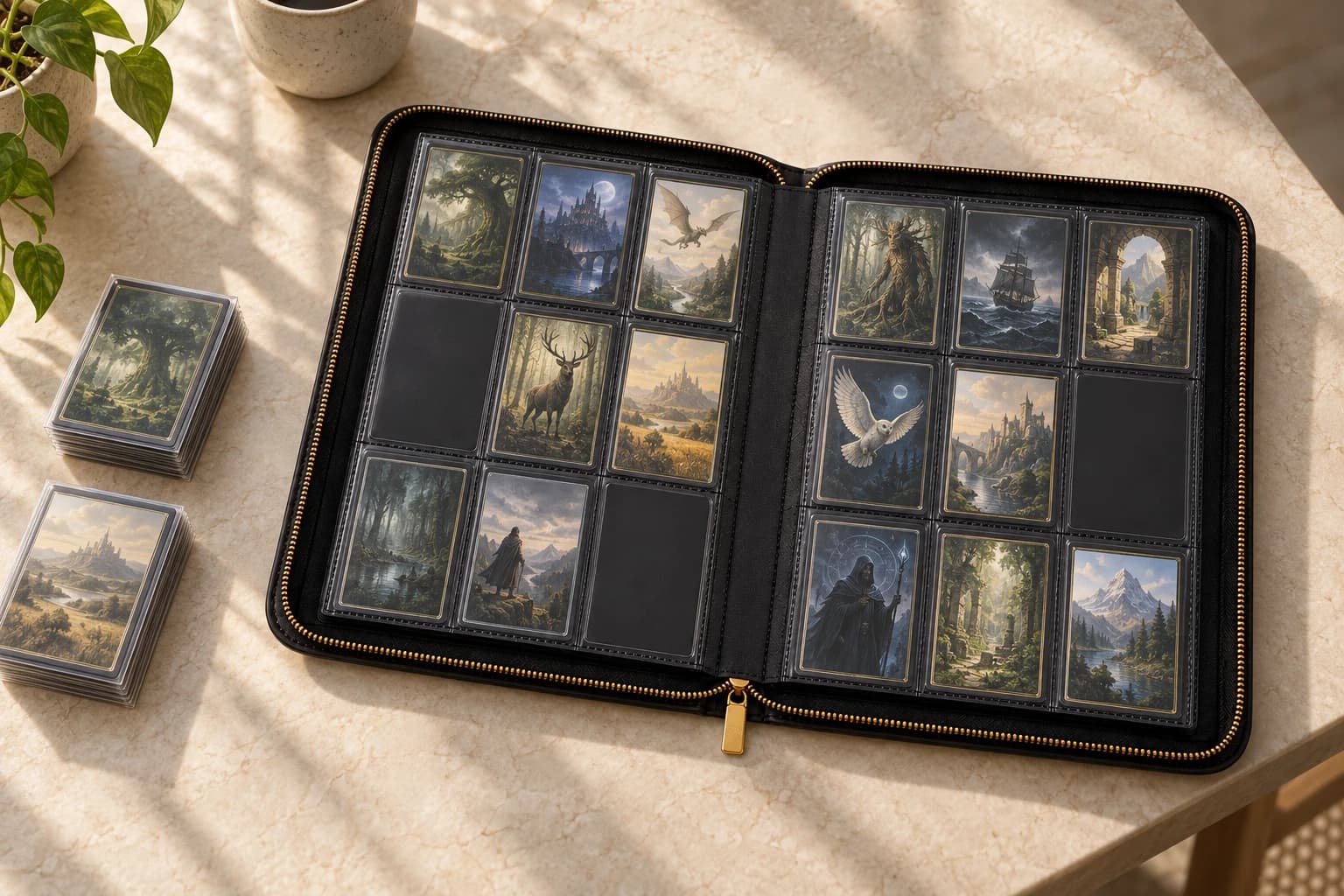
- Is it part of a collection you enjoy raw in a binder?
- Are you grading for value, protection, authentication, or personal preference?
Those reasons are all valid, but they lead to different choices. A sentimental card may be worth grading even if the market says otherwise. A modern card with visible flaws may be better left raw.
Inspect before you submit
Look at the card under bright, indirect light. Avoid harsh sunlight and avoid touching the surface. Hold the card by the edges and check it from several angles.
Pay attention to the usual grading points:
- Corners, for whitening, softness, or small bends.
- Edges, for chips, fraying, or rough cuts.
- Surface, for print lines, scratches, dimples, dents, fingerprints, and residue.
- Centering, especially on cards where the border makes it easy to see.
- Back condition, which is easy to forget and just as important.
A magnifying glass or phone light can help, but do not turn inspection into handling. Every extra touch adds risk.
Do not try to fix the card
This is where many cards are harmed. Do not polish, wipe, flatten, press, bend, trim, recolour, or scrape a card. Do not use liquids. Do not use a cloth on a glossy surface unless you fully understand the risk, because even soft fabric can drag dust across the finish and leave hairline scratches.
If there is loose dust, a gentle air blower can be safer than touching the card. If there is a fingerprint or mark, think carefully before doing anything. A small flaw is often better than a new scratch, a smeared autograph, or surface damage from cleaning.
Preparation should protect the card, not change it.
For autographs, patch cards, rookies, and thicker cards, be even more conservative. Materials and surfaces vary, and pressure can leave marks quickly. We covered those cards separately in how to protect rookie cards, autographs, and patch cards.
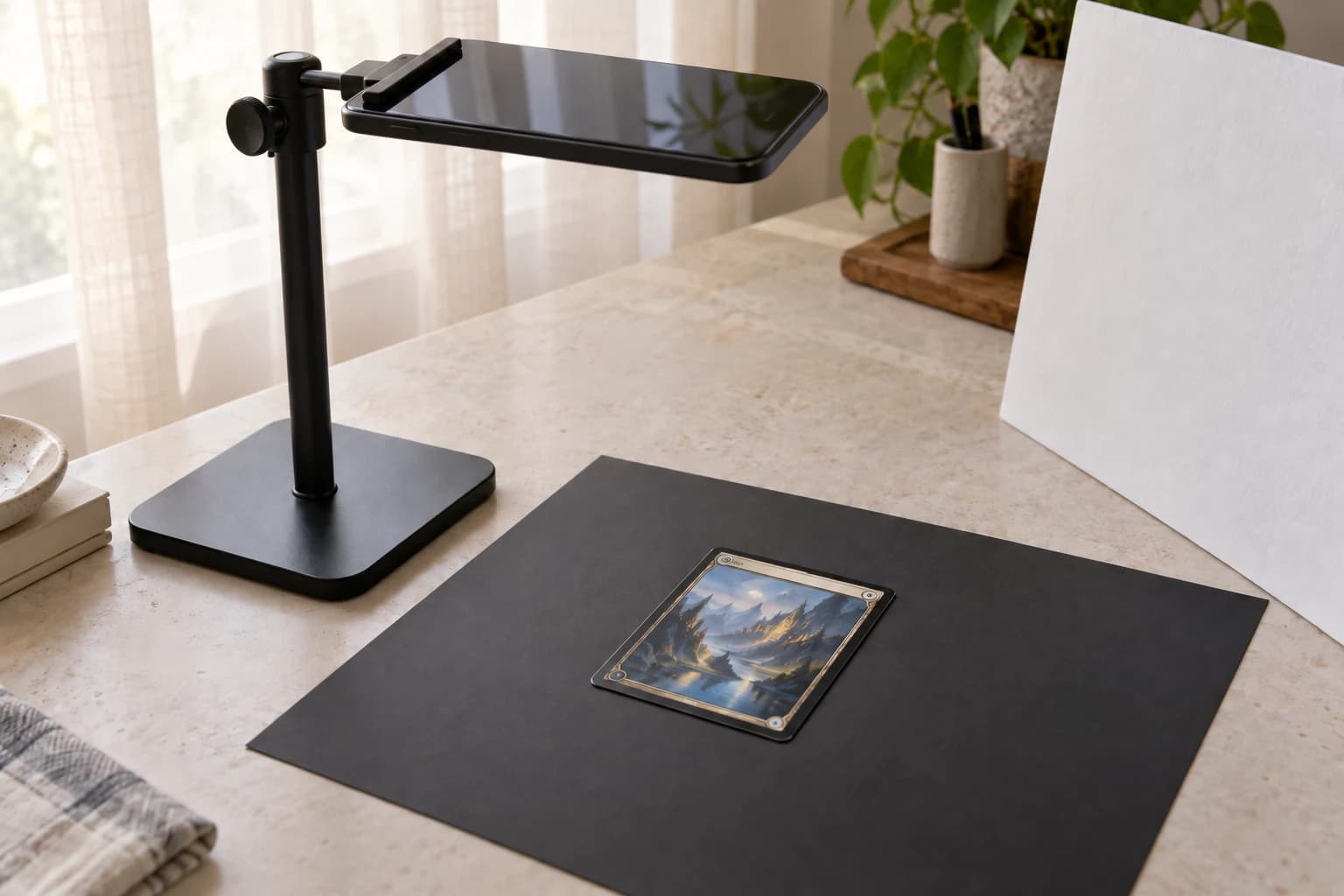
Photograph and record the card
Before packing, take clear photos of the front and back. For valuable cards, also photograph corners, any existing flaws, and the card inside its holder before shipping. Keep a simple record with the card name, set, number, condition notes, estimated value, and the service or submission you plan to use.
This is useful for your own memory, for insurance, for sale records, and for checking the card when it returns. Grading can take time, and a written note is more reliable than remembering exactly what you sent.
Use the right sleeve and holder
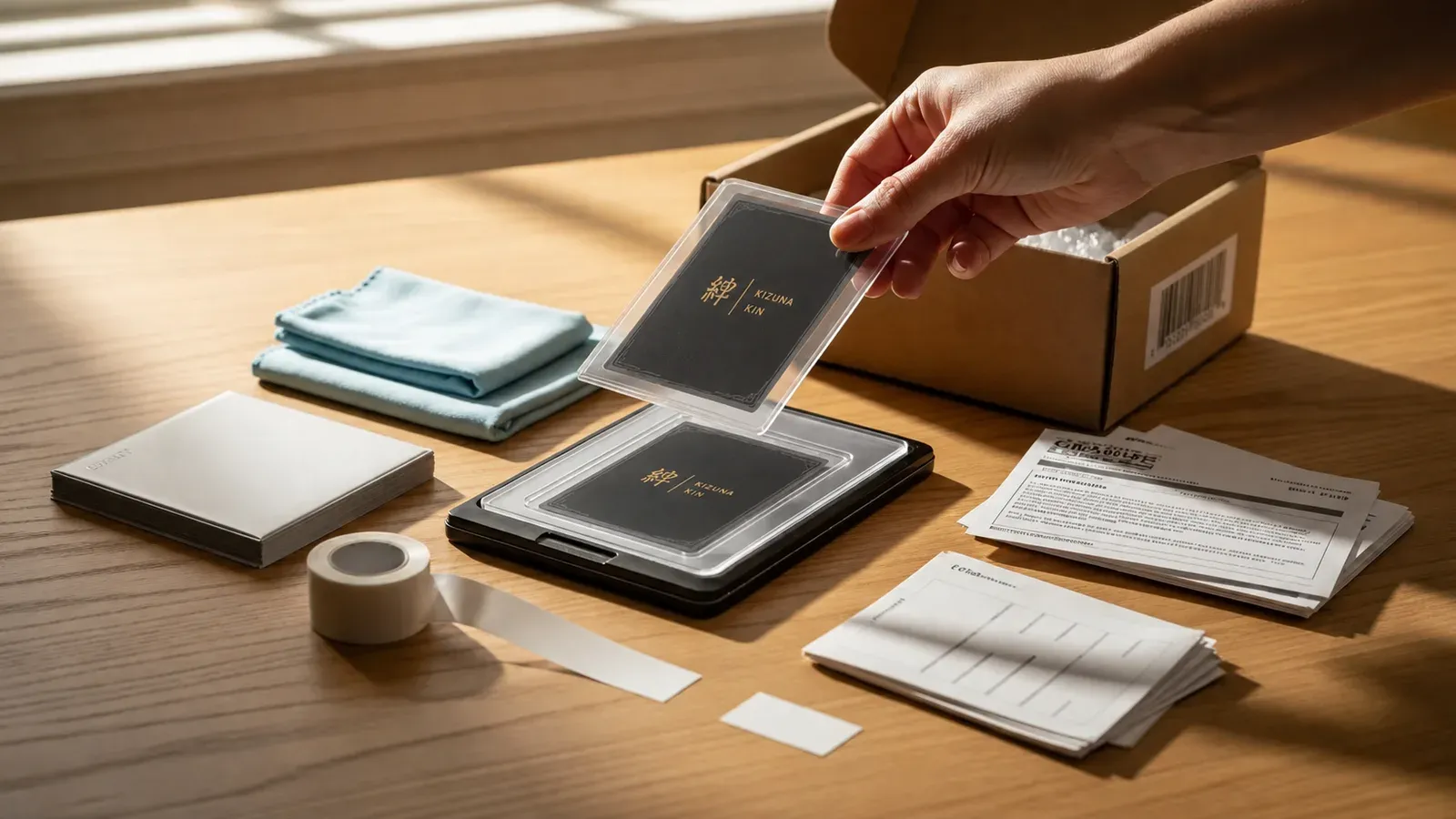
Most grading submissions use a soft sleeve and a semi-rigid card holder, unless the grading company gives different instructions. Always check the current submission rules of the company you are using before mailing anything.
The general handling routine is simple:
- Wash and dry your hands, or use clean gloves if you prefer.
- Open the sleeve slightly so the card does not catch a corner.
- Slide the card in slowly, without forcing it.
- Place the sleeved card into the holder with steady pressure from the protected edges.
- Do not overfill, tape over, or tightly compress the holder.
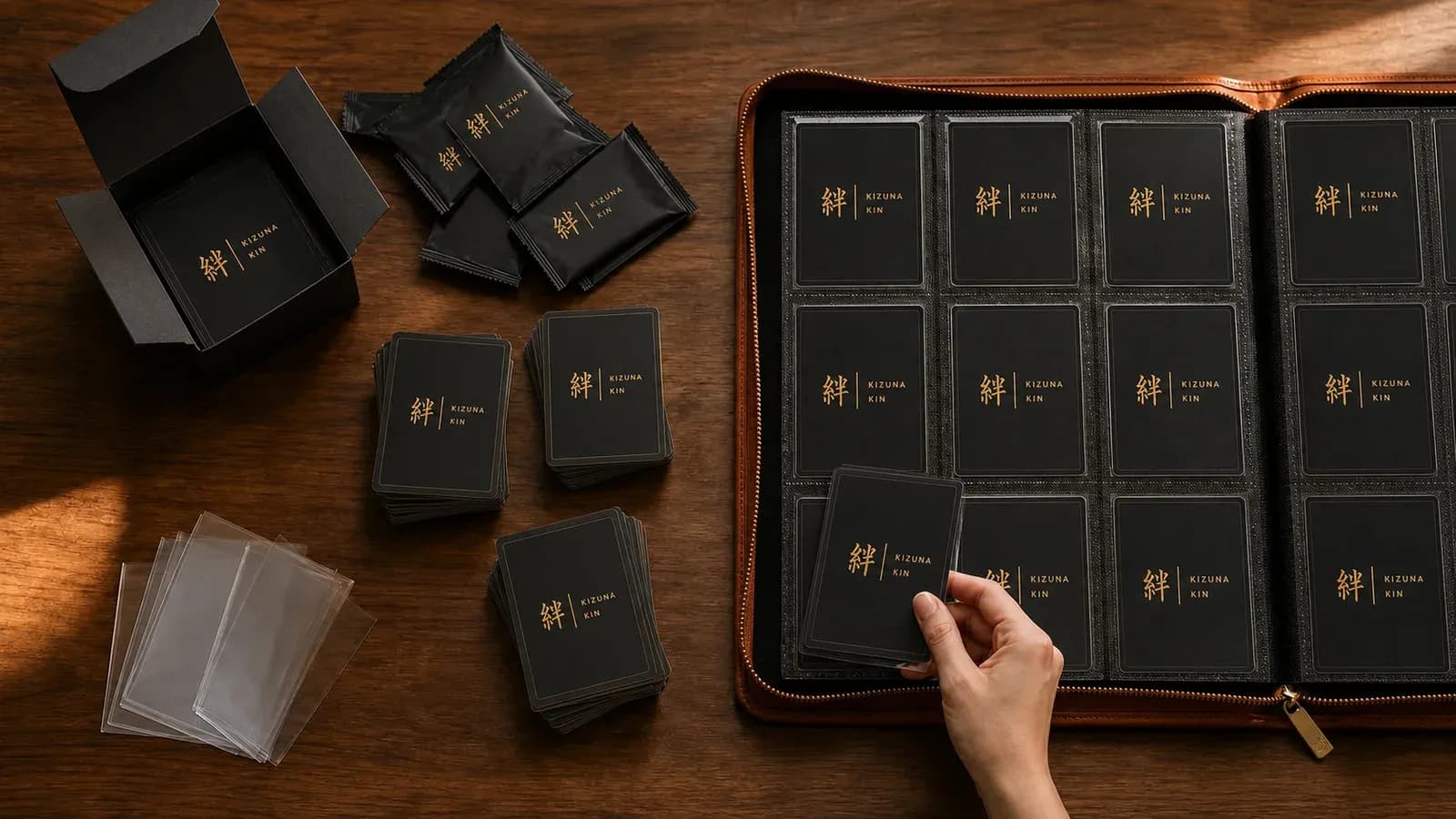
Avoid old, cloudy, sticky, or unknown plastic. Use clean PVC-free sleeves and fresh holders. The material touching the card matters, as explained in PVC-free vs acid-free: what card storage terms actually mean.
Pack so the cards cannot move
Shipping damage usually comes from movement and pressure. The package should keep cards square, still, and protected from bending.
For a small submission, place the holders between rigid cardboard or another firm protective layer, then secure them so they do not slide. Use padding around the bundle and a strong box or mailer that cannot bend easily. For multiple cards, keep them in the same order as the submission paperwork and avoid packing them so tightly that pressure transfers into the cards.
Do not let tape touch the card holder opening. Do not pack raw cards loose. Do not rely on a plain envelope for anything you care about.
Ship with tracking and suitable insurance
Once the cards leave your hands, documentation matters. Use a tracked service, keep the receipt, and insure the package appropriately for the value you are comfortable declaring. If the cards are valuable, photograph the packed box before it is sealed and keep a copy of the submission form.
The best shipping method depends on the cards, the destination, and the grader's instructions. The principle is always the same: trackable, protected, and documented.
Plan for the return
Grading does not end when the cards come back. When the package arrives, open it on a clean surface and compare the returned cards with your records. Check the slab for cracks, scratches, label issues, or loose movement inside the case.
Then store the graded cards properly. A slab protects the card, but the slab still scratches and cracks. Use slab sleeves, avoid sunlight, and keep cases separated. For a deeper guide, see how to store graded cards.
A simple grading preparation checklist
Before submitting, work through the list:
- Choose cards that make sense to grade.
- Inspect front, back, corners, edges, surface, and centering.
- Avoid cleaning or altering the card.
- Photograph and record each card.
- Use clean PVC-free sleeves and suitable holders.
- Follow the grading company's current submission instructions.
- Pack cards so they cannot bend, slide, or rub.
- Ship with tracking and appropriate insurance.
- Check and store the slabs carefully when they return.
Grading is easiest when the preparation is quiet and methodical. Handle less, document more, and resist the urge to improve what is already there. The card should arrive exactly as it left you: protected, stable, and ready to be judged on its own condition.