How to store sealed trading card products
Sealed trading card products have their own kind of fragility. A single card can be sleeved, paged, graded, or placed in a holder. A sealed box has corners, shrink wrap, seams, labels, packs, and empty space inside. Its condition is part of its value, and once the wrap is torn, crushed, faded, or dented, the product is no longer the same object.
Storing sealed product well means protecting the packaging as much as the cards inside it.
Understand what you are protecting
A sealed collection can include booster boxes, elite trainer boxes, collection boxes, tins, blasters, hobby boxes, loose packs, and older wax. Each format has different weak points.
Booster boxes are vulnerable at the corners and shrink wrap. Collection boxes often have clear plastic windows that scratch and dent. Loose packs can crease. Tins can dent. Older wax can dry, split, or become fragile. Heavy boxes can crush lighter boxes below them.
The first rule is to store sealed product by shape and strength, not just by set or franchise.
Keep the climate stable
The cards inside sealed product are still paper. The packaging around them is still affected by heat, moisture, and light. A sealed box is not a climate-controlled vault.
Use the same basic conditions you would use for valuable cards: cool, dry, and stable. Avoid attics, garages, basements, exterior walls, radiators, and windows. Long-term heat can soften adhesives, warp packaging, and stress shrink wrap. Humidity can ripple cardboard, encourage mould, and make packs feel soft or swollen.
A room that is comfortable for long-term card storage is usually comfortable for sealed product too. For broader storage principles, see how to store trading cards long-term without damage.
Protect from light
Sealed product is often attractive, which makes it tempting to display. The problem is that display exposes the box to the same light damage as a card. Printed packaging can fade, white areas can yellow, and clear windows can become cloudy or brittle with enough exposure.
If you display sealed boxes, keep them out of direct sun and bright indirect daylight. Use shaded shelving and rotate what is on display. For anything rare or especially valuable, dark storage is safer than permanent display.
Display is fine when it is a choice. It becomes a problem when a sealed box sits in the same bright spot for years.
Do not stack too much weight
Sealed product looks sturdy until the bottom box takes the weight of everything above it. Corners compress, panels bow, and shrink wrap can stretch or split. This is especially common with large collection boxes, thinner retail boxes, and older packaging.
Store heavier items low and lighter items higher. Keep stacks short. Use shelves that support the whole base of the product, not wire racks that leave pressure lines. If a box has a display window, avoid putting weight on that side.
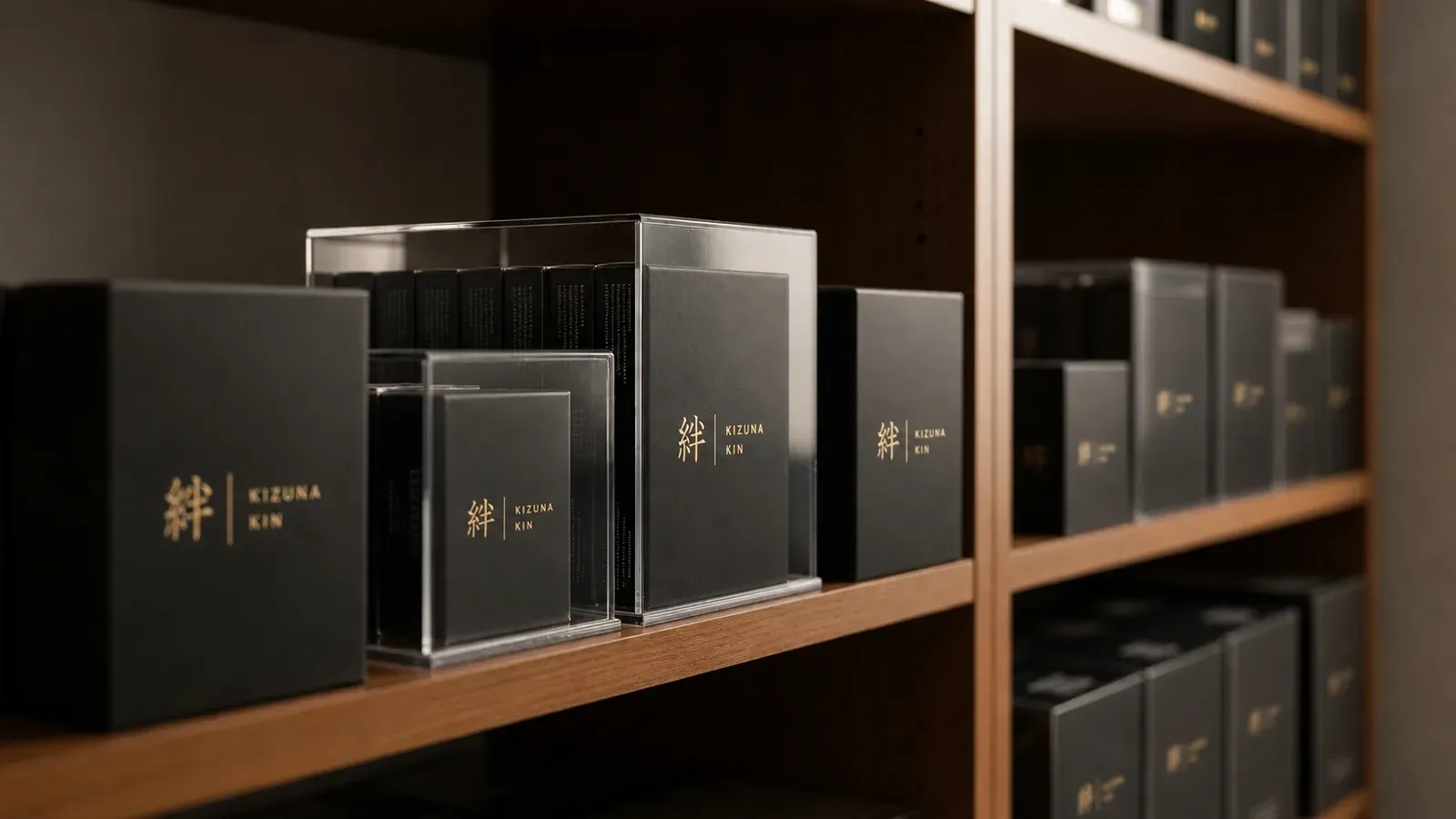
For booster boxes, acrylic cases or fitted protectors can help keep the shape square, but they are not a reason to stack recklessly. A protector guards against scuffs and small knocks. It does not make the product immune to pressure.
Use protectors where they make sense
Acrylic cases, PET protectors, and storage boxes can be useful for sealed product, especially for booster boxes and high-value items. The right protector keeps dust, scratches, and casual handling away from the packaging.
Choose protectors that fit cleanly. Too tight, and they can press on corners or shrink wrap. Too loose, and the product moves inside the case. Avoid protectors that smell strongly of plastic or feel oily. As with sleeves and binder pages, specific material matters more than vague claims. We explain those terms in PVC-free vs acid-free: what card storage terms actually mean.
For loose packs, use pack-sized sleeves, semi-rigid protectors, or boxes that prevent bending. Never pack loose packs in a way that lets them fold around each other.
Keep sealed product off the floor
A sealed case on the floor may feel safe because it is not going to fall, but floors are where water, dust, pests, and accidental kicks happen first. Keep sealed product on shelves, in cabinets, or inside storage containers raised off the ground.
If you use plastic storage bins, make sure the contents are not packed so tightly that boxes press into one another. A sealed bin can also trap moisture if the room is damp, so do not use airtight storage as an excuse to ignore humidity.
Handle shrink wrap carefully
Shrink wrap is part of the sealed product's condition. It scratches, stretches, tears, and picks up fingerprints. Handle boxes with clean, dry hands and lift them from underneath rather than pinching corners or pulling at the wrap.
Be careful with price stickers, old labels, and store security tags. Removing them can tear wrap or lift print. In many cases, leaving a sticker alone is safer than trying to make the box look cleaner.
A sealed product is valuable because it stayed untouched. Treat the packaging like part of the collection.
Record what you own
Sealed collections can become difficult to track because the products are often stored in boxes, cases, or shelves rather than browsed like cards in a binder. Keep a simple inventory with product name, set, language, quantity, condition notes, purchase date, purchase price, and storage location.
Photos are useful too. Photograph all sides of valuable sealed items, including shrink wrap, seals, barcodes, dents, and existing flaws. If you ever sell, insure, or move the collection, those records save time and help avoid disputes.
Moving or shipping sealed product
When sealed product moves, protect the corners first. Use padding around each item and avoid letting boxes rub directly against each other. For shipping, choose a box with enough room for padding but not so much space that the product shifts. Double-boxing can be sensible for expensive sealed items.
Do not ship a valuable sealed box loose inside a larger box. Every movement becomes a corner ding waiting to happen.
A simple sealed-product checklist
For long-term storage, keep the rules plain:
- Store sealed products in a cool, dry, stable room.
- Keep them away from sunlight and strong display lighting.
- Sort by shape and strength, not only by set.
- Keep stacks short and avoid pressure on display windows.
- Use fitted protectors for valuable boxes and packs.
- Keep everything off the floor.
- Handle shrink wrap and labels carefully.
- Keep an inventory with photos and condition notes.
Sealed product asks for patience. The appeal is that it has not been opened, handled, sorted, or changed. Good storage keeps that promise intact: square corners, clean wrap, unfaded packaging, and the quiet confidence that the product is still exactly what it says it is.