PVC-free vs acid-free: what card storage terms actually mean
Card storage language can sound more precise than it is. A sleeve is called archival. A page says acid-free. A binder claims to be PVC-free. All of those words can matter, but they do not mean the same thing, and they do not protect a collection from the same risks.
For trading cards, the simplest rule is this: acid-free matters for paper and board. PVC-free matters for plastic. Since the material touching a card is usually a sleeve or binder page, PVC-free is the term collectors should look for first.
What acid-free means
Acid-free is a paper term. It means the material has been made or treated so it does not contain the acids that cause paper to yellow, weaken, and become brittle over time. It matters for storage boxes, backing boards, dividers, tissue, and any paper-based material that sits close to a collection.
It is a useful standard, but it is not enough on its own. A plastic page can be acid-free and still be the wrong plastic. If a binder page is made from PVC, the problem is not paper acidity. The problem is the plastic itself.
What PVC-free means
PVC stands for polyvinyl chloride. It is a flexible plastic used in many cheap sleeves, pages, and old-style binders. The trouble is that flexible PVC usually depends on plasticisers: chemicals added to make the plastic soft and bendable.
Over time, those plasticisers can move out of the plastic and onto whatever is touching it. With cards, that can mean a cloudy surface, a tacky feel, soft edges, or a card that seems to stick slightly inside the page. This is the damage collectors are trying to avoid when they talk about PVC.
A PVC-free page removes that risk. It is the baseline, not a luxury.
The safer plastics: polypropylene and PET
The two materials collectors should be comfortable seeing are polypropylene, often shortened to PP, and PET, sometimes described as polyester or Mylar-style film.
Polypropylene is common for trading card sleeves and binder pages because it is clear, flexible, and chemically stable. PET is stiffer and often used where more structure or clarity is needed. Both are considered inert compared with flexible PVC, which is why good sleeves and pages are usually described as PVC-free polypropylene or archival-safe polypropylene.
If the product page does not say what the plastic is, be careful. Clear and soft is not enough. The exact material matters.
What archival-safe should mean
Archival-safe is useful only when it is backed by specifics. Ideally, it should mean the material is chemically stable, PVC-free, and suitable for long-term contact with paper-based objects. In collector language, it is often used more loosely.
A better way to read the label is to look for the actual claims underneath it:
- PVC-free, for sleeves and binder pages.
- Polypropylene or PET, for plastic touching the card.
- Acid-free, for paper, board, and dividers.
- No soft vinyl, especially for pages that feel oily, rubbery, or unusually flexible.
The words do not need to be complicated. They just need to be specific.
Why the page matters more than the binder cover
Collectors often think first about the outside of a binder. The cover matters for structure, handling, and how the binder ages, but the page is what touches the card. If the page is wrong, the rest of the binder cannot make up for it.
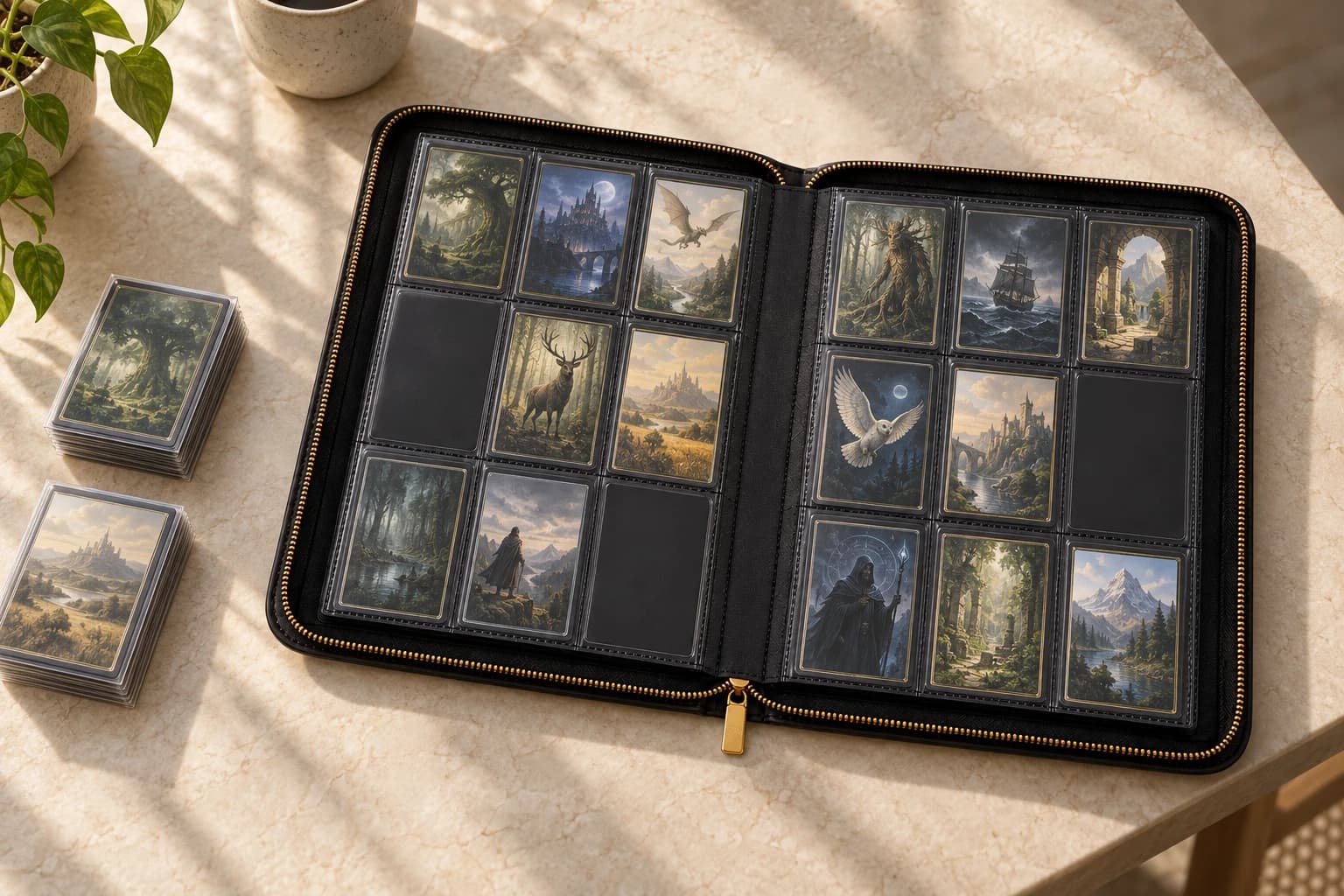
That is why a safe binder starts with the inside: PVC-free pages, a snug pocket, and a design that does not press, bend, or drag against the cards. A ringless binder also avoids the crescent dents and page shifting that can happen around metal rings. We covered that in more detail in how to store a card collection in a binder.
A simple buying checklist
When you are choosing sleeves, pages, boxes, or a binder, look for plain material information rather than vague claims:
- Sleeves should be PVC-free polypropylene or another clearly named inert plastic.
- Binder pages should be PVC-free, preferably side-loading, and not overly soft or sticky.
- Boxes and paper dividers should be acid-free if they sit close to the cards.
- Anything that smells strongly of plastic, feels oily, or leaves residue should stay away from the collection.
- Valuable cards should be sleeved before they go into any page.
The safest material is the one that tells you exactly what it is.
How this fits with long-term storage
Good materials are only one part of preservation. Light, heat, humidity, and handling still matter. Even the best page cannot save a card left in a hot room or a sunny window. The right approach is layered: safe sleeves and pages, a stable room, limited handling, and storage that keeps the cards flat and still.
For the broader care routine, start with how to store trading cards long-term without damage. For the binder itself, choose one built around stable pages, a closed structure, and a design you will actually keep using.
That is the point of material language. It should make the decision clearer. Acid-free for paper. PVC-free for plastic. Specific materials over vague promises. Once you know those three things, most bad storage becomes easy to avoid.