How to protect rookie cards, autographs, and patch cards
Sports cards are not all built the same. A base card can usually survive ordinary binder storage if it is sleeved, paged, and kept in stable conditions. A rookie card, autograph, or patch card asks for more attention. The value is often higher, the surface is more sensitive, and the card itself may be thicker, signed, numbered, textured, or built from several materials.
That does not mean every important sports card needs to disappear into a vault. It means the protection should match the card. The aim is simple: keep the corners sharp, the autograph clean, the surface free of pressure marks, and the card easy to enjoy without handling it too often.
Why these cards need different care
A rookie card is often the card collectors return to first. It carries the beginning of a player’s story, which is why condition matters so much. Soft corners, surface scratches, edge whitening, and centering issues can all affect desirability, especially if the card may be graded later. PSA’s own grading standards focus heavily on condition details such as corners, edges, surface, gloss, print quality, and centering. That is a useful reminder: protection is not only about avoiding dramatic damage. It is about avoiding small flaws that compound over time.
Autograph cards add another problem: ink. A signature can fade, smear, transfer, or be dulled by careless storage. Patch cards add thickness and texture. They can sit awkwardly in standard pages, press against neighbouring cards, or catch on tight sleeves if forced.
The safest approach is to sort sports cards by risk, not only by price.
Sleeve every serious card immediately
The first layer should be simple: a clean, soft sleeve. For most standard rookie cards, a penny sleeve is the minimum. For chrome, foil, glossy, or condition-sensitive cards, use a quality sleeve that fits cleanly and does not require pressure to insert.
Do not push a sharp corner into the closed edge of a tight sleeve. Open the sleeve slightly, guide the card in slowly, and hold the card by the edges. If a card is thick, do not force it into a sleeve designed for standard stock. Use a sleeve made for thicker memorabilia cards.
For autographs, make sure the ink is fully dry before sleeving if the card has been signed in person. Many pack-pulled autograph cards are already cured, but fresh marker ink needs caution. Avoid touching the signature area, even through a sleeve. Pressure and oil are both unnecessary risks.
Match the holder to the card
The right holder depends on how valuable, thick, and frequently handled the card is.
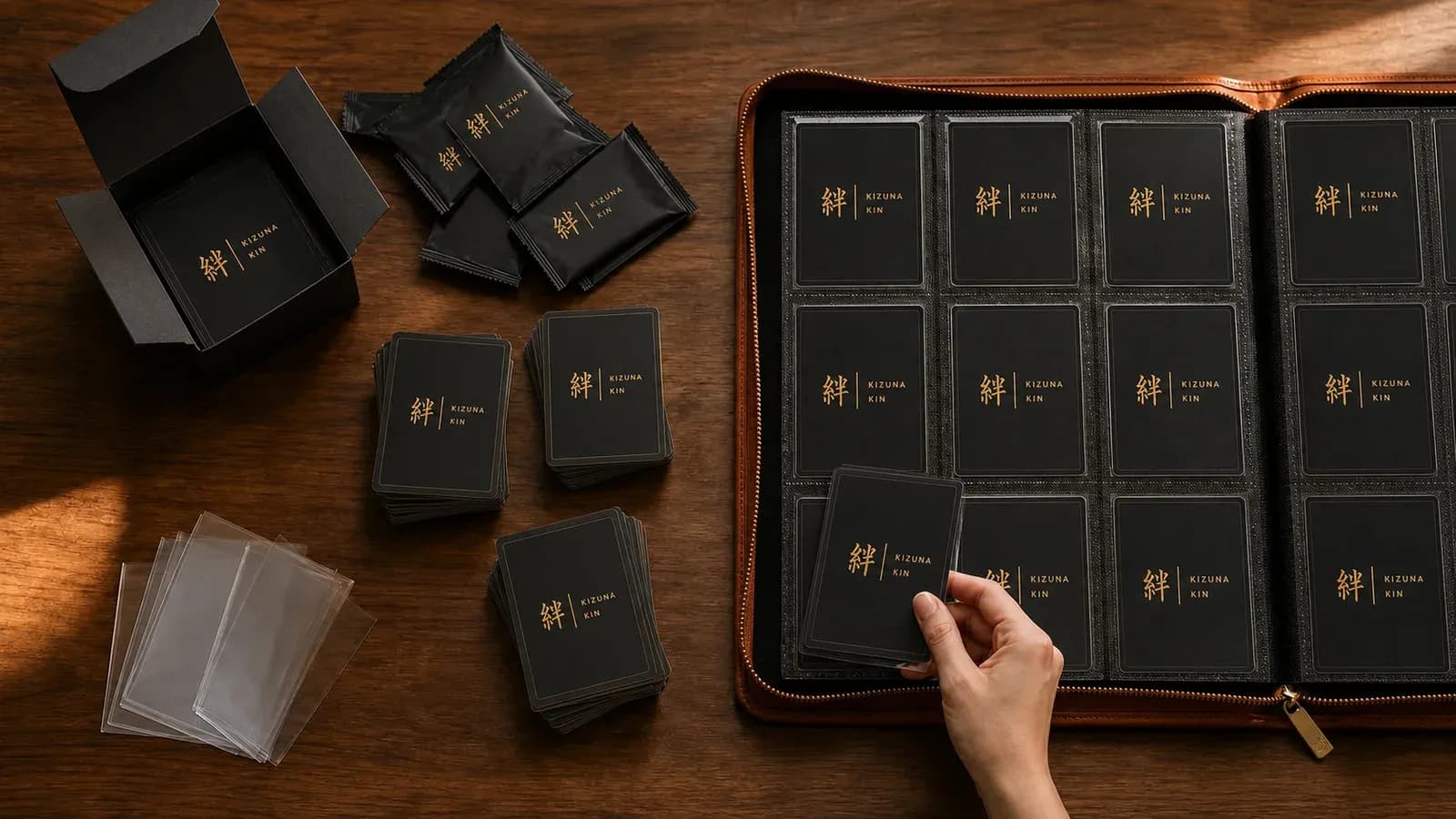
- Standard rookie cards: sleeve first, then store in an archival binder page, semi-rigid holder, or toploader depending on value.
- Chrome, foil, and glossy cards: sleeve first and avoid any holder that creates surface pressure.
- Autograph cards: sleeve and store away from direct light; avoid pressure across the signed area.
- Patch and memorabilia cards: use sleeves and holders made for the correct card thickness.
- Very high-value cards: consider a semi-rigid holder for grading prep, a toploader for short-term handling, or professional grading if authentication and resale matter.
A common mistake is treating a thick patch card like a standard card. If the holder is too tight, the card can bow, the edges can compress, or the corners can catch when you remove it. A holder should secure the card without squeezing it.
For a broader comparison of holder types, the Kizuna Kin guide to binder vs toploader binder storage covers when each format makes sense.
Use binders for cards you want to enjoy
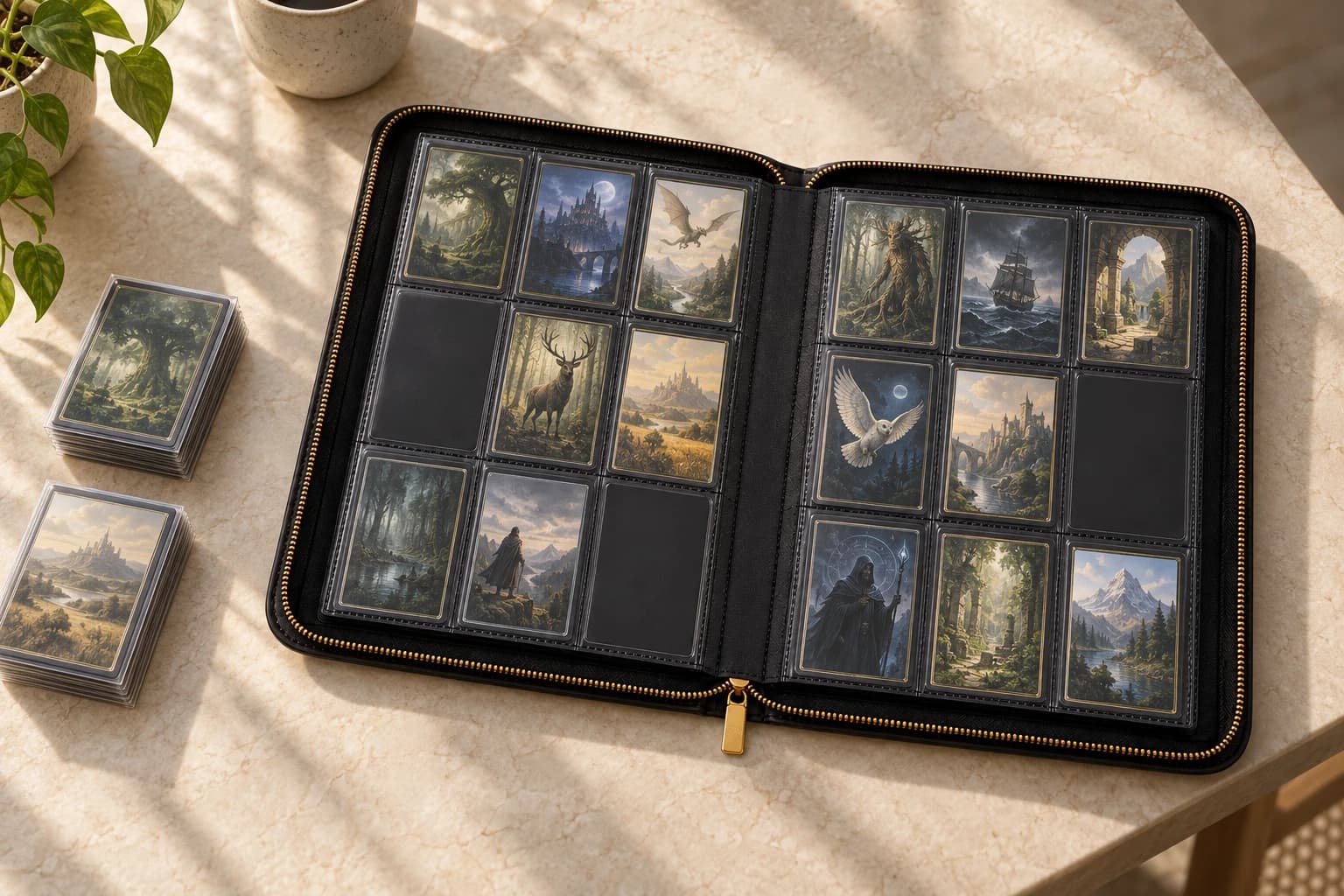
Binders are excellent for sports cards when the setup is right. They let you see a collection properly: a rookie run, a player timeline, a team set, a Hall of Fame section, or a page of favourite autographs. The key is to avoid ring pressure, cheap pages, and overstuffing.
For binder storage, use:
- Archival, PVC-free pages.
- Side-loading pockets where possible.
- One card per pocket.
- Sleeves before pages.
- No forced patch cards in standard pockets.
- A ringless binder design if the cards are valuable.
A binder should hold the card flat and still. If a page curls, bulges, or feels strained, the setup is wrong. Patch cards and very thick memorabilia cards may be better kept in individual holders unless the binder is designed for thicker cards.
For the fundamentals, read the Kizuna Kin guide to storing a card collection in a binder.
Keep autograph cards away from light
Autographs need special care because the signature is part of the card’s value and identity. Light is the obvious enemy. Displaying a signed card in direct sunlight is one of the fastest ways to make it worse. Even indirect daylight can fade ink over time.
The Library of Congress notes in its light damage guidance that light exposure causes permanent change in paper-based collections. Trading cards are not library manuscripts, but the same basic preservation logic applies: paper, ink, and colour do not improve under light.
If you display autographs, rotate them. Keep them out of direct sun. Use UV-filtering display materials when possible. For long-term storage, keep them closed in a binder, box, or cabinet where light exposure is minimal.
Control humidity and heat
Sports cards are paper objects with coatings, inks, adhesives, and sometimes fabric pieces. They respond badly to unstable rooms. Humidity can cause curling, soft edges, and mildew. Heat can accelerate material breakdown. Rapid swings are especially unkind.
The Library of Congress care guidance for works on paper gives the general preservation principle clearly: paper collections should be protected from poor handling, pests, light, humidity, temperature problems, and unstable storage.
For a home collection, the practical version is straightforward:
- Avoid attics, garages, basements, windowsills, radiators, and exterior walls.
- Store cards in a cool, dry, stable room.
- Use a small hygrometer if the room feels damp or seasonal.
- Keep binders and boxes off the floor.
- Do not leave valuable cards in a car, even briefly.
The Kizuna Kin guide to storing trading cards long-term goes deeper into climate and material choices.
Handle patch cards with extra space
Patch cards are often beautiful because they are physical: a jersey piece, a logo patch, a textured window, a thicker build. That is also why they are more vulnerable to pressure.
Do not stack unsleeved patch cards. Do not force them into flat pages. Do not put heavy books or binders on top of them. The raised areas can press into neighbouring cards, and the card can warp if stored under uneven pressure.
If a patch card matters, give it room. Sleeve it with the correct thickness sleeve, place it in a properly sized holder, and store it upright or flat without compression. If it goes in a binder, check that the page closes naturally and the pocket does not stretch.
Protect cards before grading, not after
Many collectors only become careful when they decide to grade a card. That is too late. Grading does not erase the handling history of the card. It records it.
If you think a rookie, autograph, or patch card may be graded later, treat it that way from the start. Sleeve it once. Put it into the right holder. Stop taking it in and out. Keep a note of condition, purchase source, and any certification or serial numbering.
For shipping to a grading company or buyer, follow a conservative packing method. PSA’s shipping guide recommends securing cards so they cannot shift or be damaged in transit. The collector version is simple: sleeve the card, use an appropriate rigid or semi-rigid holder, sandwich it with support, protect it from moisture, and use a sturdy mailer or box.
Keep records for expensive cards
Protection is not only physical. If a card is valuable, keep basic records:
- Purchase date and seller.
- Price paid.
- Card number, set, parallel, and serial number.
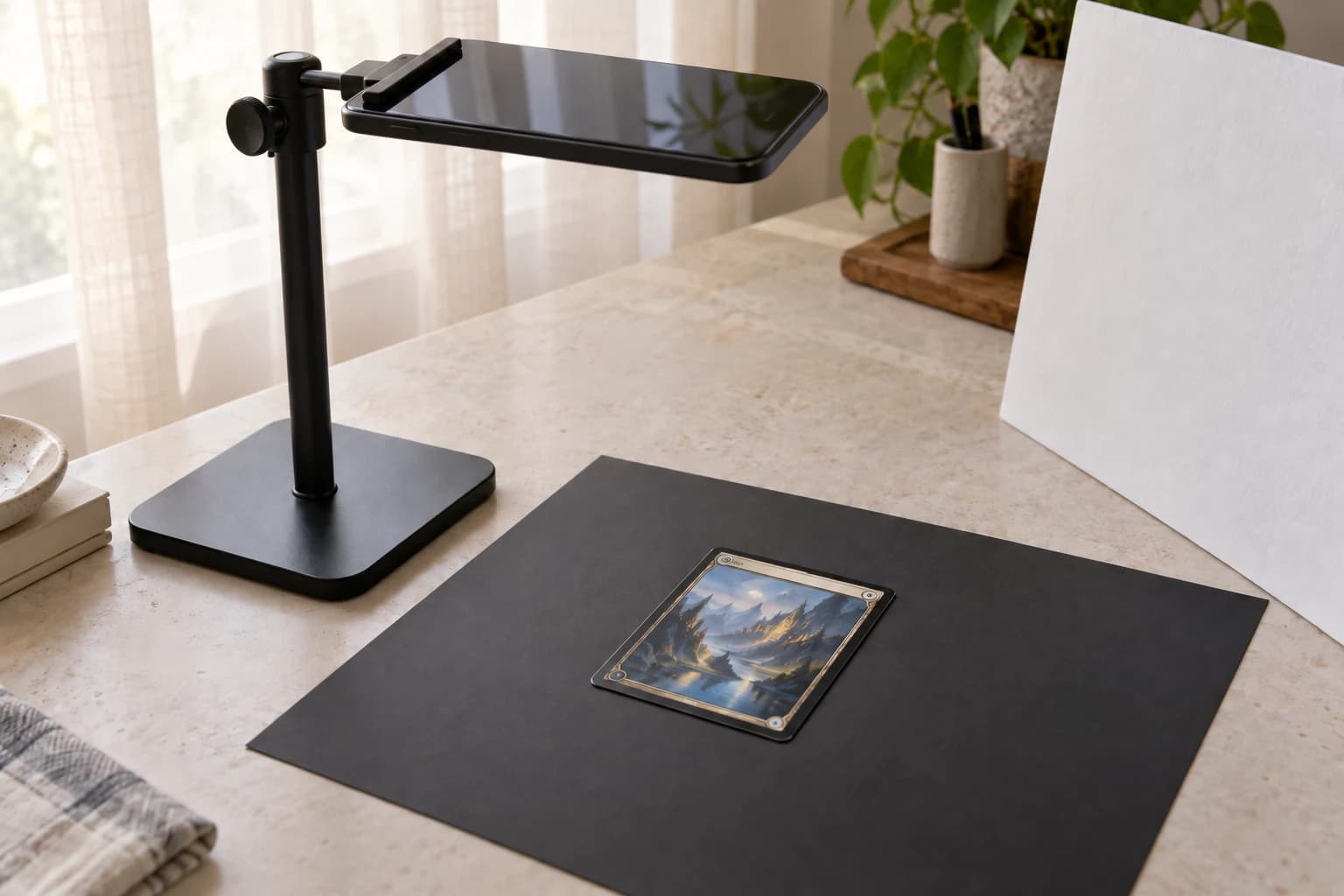
- Photos of the front and back.
- Autograph certificate or authentication details, if relevant.
- Current storage location.
This matters if you ever sell, insure, grade, or simply need to know what is in the collection. A beautiful collection is easier to protect when it is also documented.
A simple protection system
If you want one rule, use this:
- Rookie cards: sleeve, page or holder, and keep flat.
- Autographs: sleeve, protect from light, and avoid pressure on the signature.
- Patch cards: use thickness-appropriate sleeves and holders; never force them.
- High-value cards: reduce handling, document them, and consider grading or separate storage.
- Binder-worthy cards: store them in archival pages inside a binder you will actually open and enjoy.
A serious sports-card collection should not feel like a pile of fragile objects you are afraid to touch. It should feel considered. The right card, in the right sleeve, in the right page or holder, kept in the right room. That is enough to protect the story without hiding it from view.